





Young people in Ontario are proving their passion for tech makes them just as able to create as “real-world engineers.”
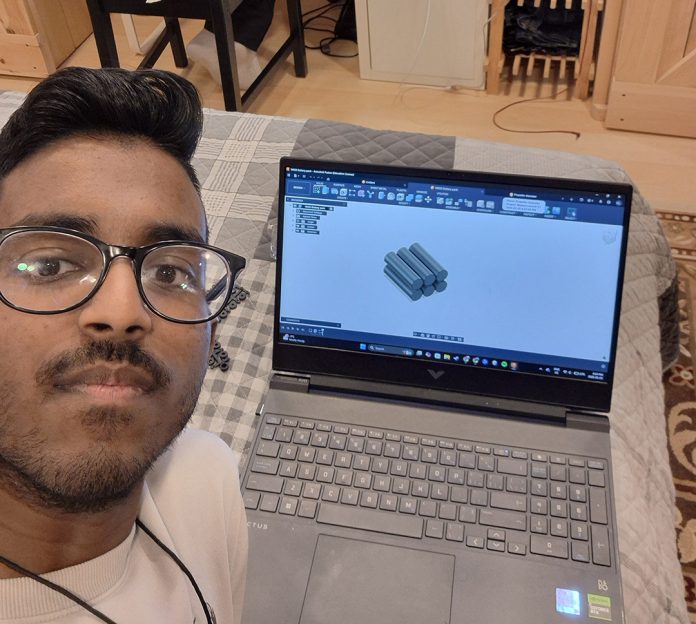
A group of 30 Ontario secondary and post-secondary students is building a drone that can fly from Whitby to Quebec, collecting weather data, according to team head of Mission Launch, Haarish Logeswaran, a Grade 11 student at Brooklin High School.
He said the team plans to supply data to universities and meteorologists so they can use it to improve their forecast accuracy.
The idea for Mission Launch grew out of frustration with generalized forecasts.
“In one area it might be raining, in another area it might be sunny, but on the weather app as a whole says it will rain,” said Logeswaran. “It wasn’t useful to companies, businesses and just citizens who want to try and get on with their day.”
Liam Nayaar of Richmond Hill, founder and secondary manager of Mission Launch, said climate change is “worsening in intensity” and getting “more complex.”
“As a member of a generation that’s going to be growing up in a time of uncertainty, I would say climate-wise, I have a bit of a passion for trying to make a change in the world,” said Nayaar, a Grade 11 student at Holy Trinity Secondary School in Richmond Hill, who hopes to attend the University of Waterloo for electrical engineering.
According to the federal government, Canada is warming at roughly twice the global average rate, increasing the frequency and intensity of extreme weather events.
On its website, Environment and Climate Change Canada says improved localized monitoring is critical as storms become more variable and severe. It says people are experiencing “the costs of climate-related extremes firsthand.”
Meanwhile, the Insurance Bureau of Canada has noted insured damage from severe weather has exceeded $2.4 billion in 2025, showing the economic cost of forecasting gaps.
Nayaar said the team’s goal is to prove innovation doesn’t require “tens of thousands of dollars to invest in infrastructure, weather balloons, etc.”
Their first prototype costs $320, far less than traditional meteorological equipment, according to Logeswaran, and and is designed to show possible investors they have a working model.
There are regulatory hurdles. To complete a long-distance flight above 122 metres, the team would need a Special Flight Operations Certificate (SFOC). Applicants for the certificate are required to be 18 or older, so Mission Launch has university advisors to apply and guide them with finances.
“They also require very strict safety standards,” Logeswaran said, including emergency plans and insurance.
Mission Launch is hosting a Go Fund Me to pay for their research and development. The team hopes to have its first prototype finished this spring, so they can launch the first test flight in summer.