





Topping both movie and music charts with a badass image concealing a cute, fun and vulnerable story, KPop Demon Hunters is an unexpected gem that subverted expectations and highlights deep personal traumas.
KPop Demon Hunters released on Netflix in June 2025, with a sequel being announced to release in 2029.
However, it was originally made by Sony Animation in 2021. Sony sold the distribution rights to Netflix in 2023 for $20 million because they were unsure of how audiences would receive the film. On top of that, production was happening at the same time as a worldwide lockdown.
The movie walks a fine line, balancing between a movie the can be marketed to kids, without being boring or childish to more mature audiences. In that regard, it has succeeded.
There is no question that the movie appeals to kids. Put on any song and a choir of 20 young voices will be heard singing every line, including the parts in Korean.
The appeal to older audiences, however, comes in the heavier themes of fear and shame that may go unappreciated or not understood by kids.
It’s not that different from movies like Kung Fu Panda or How To Train Your Dragon where the appeal for adults is in the deeper message.
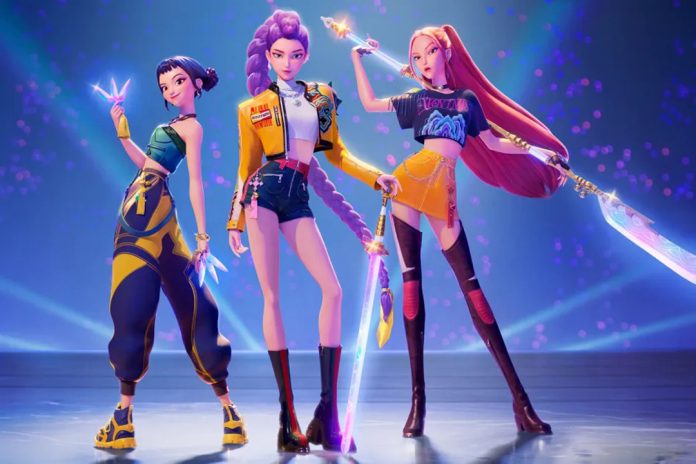
KPop Demon Hunters centres around Rumi, Mira and Zoey, the members of sensational Kpop group Huntr/x. When not performing for sold out stadiums with thousands of diehard fans, the girls perform their duties as hunters.
Having fought against the demons for hundreds of years, hunters seal them under the barrier known as the Honmoon, which covers the surface of the earth.
The concept of normal people by day, warriors by night, is nothing new. Characters like Batman and anime protagonists like Sailor Moon show the concept done well.
This movie takes it to another level with the heroes being prominent public figures. It adds an extra level of tension that feels more impactful than the exposure of an average person or someone who works in the shadows.
In the movie, hunters power the Honmoon through song and the resonance with the souls of their fans.
After numerous generations before them, the Huntr/x girls notice during a concert that the barrier is about to turn “golden,” and seal the demon-kind below the earth for good.
The main protagonist, Rumi, has a dark secret hidden from the world: she is half-demon.
The most notable trait of demons is their “patterns.” Pink and purple glowing lines that run up and down their bodies. For Rumi, these patterns that scar her body bring her fear that she will be exposed, not just to her fans and the world but to her friends and fellow Huntr/x members, who she desperately tries to hide her shameful secret from.
Shame is another key theme in the movie. The main antagonist, Gwi’ma, the overlord of the demons, uses shame to trap demons into servitude – demons like Jinu.
Throughout the film, Jinu tries to grow as an individual and put his past behind him. Jinu is a tragic character who “sold his soul” to Gwi’ma for fame and fortune.
Gwi’ma uses this past to manipulate Jinu into carrying out his plan to destroy the Honmoon and devour human souls.
These issues are compounded by the culture of perfection and image. The characters are encouraged not to speak up or ask for help, causing and magnifying every major issue in the film’s plot.
Rumi’s fears of being found as a demon? Jinu’s shame of betraying loved ones for fame? Those secrets that bind them bring out their worst when they boil to the surface.
The solution? Embracing the flaws that keep them in chains.
By learning to accept and live with what haunts them the most, Rumi and Jinu become more complete versions of themselves.
They become unshackled by guilt and fear, and transform into versions that can live authentically for themselves and those they care about.