





The land Charles Stevens was raised on is now home to a McDonald’s.
Nestled along Hwy. 2 in Bowmanville across the street from a Cineplex and the Home Depot used to stand a multi-generational cattle and dairy farm acquired in 1810.
Knowing his son wasn’t interested in milking cows, Stevens’ father sold the land to developers.
So, at 21-years-old, while still a student at the University of Guelph, Stevens purchased 81 acres in 1975 in Newcastle and started from scratch.
Someone close to him said he’d be bankrupted within five years.
A government soil test said it would be impossible to grow his chosen crop, blueberries but he did it anyway.
Then, at 65-years-old, when most people retire, Stevens hiked to the Mount Everest base camp, and last year he swam in the Amazon river.
“I’m a guy that says if somebody tells me I can’t do something, I usually do it,” – Charles Stevens
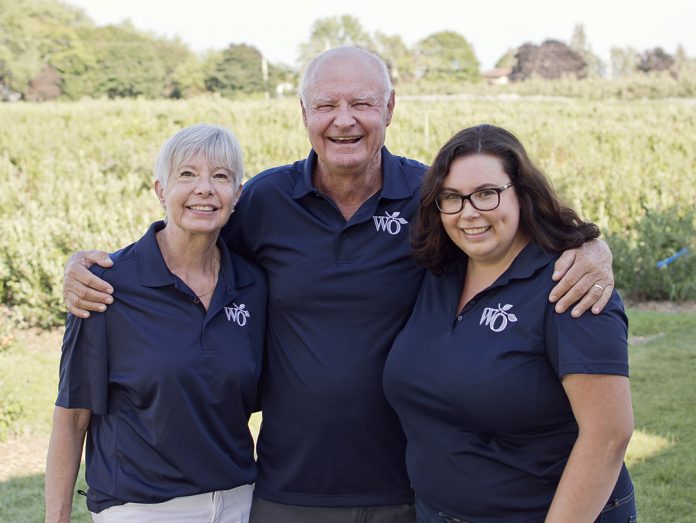
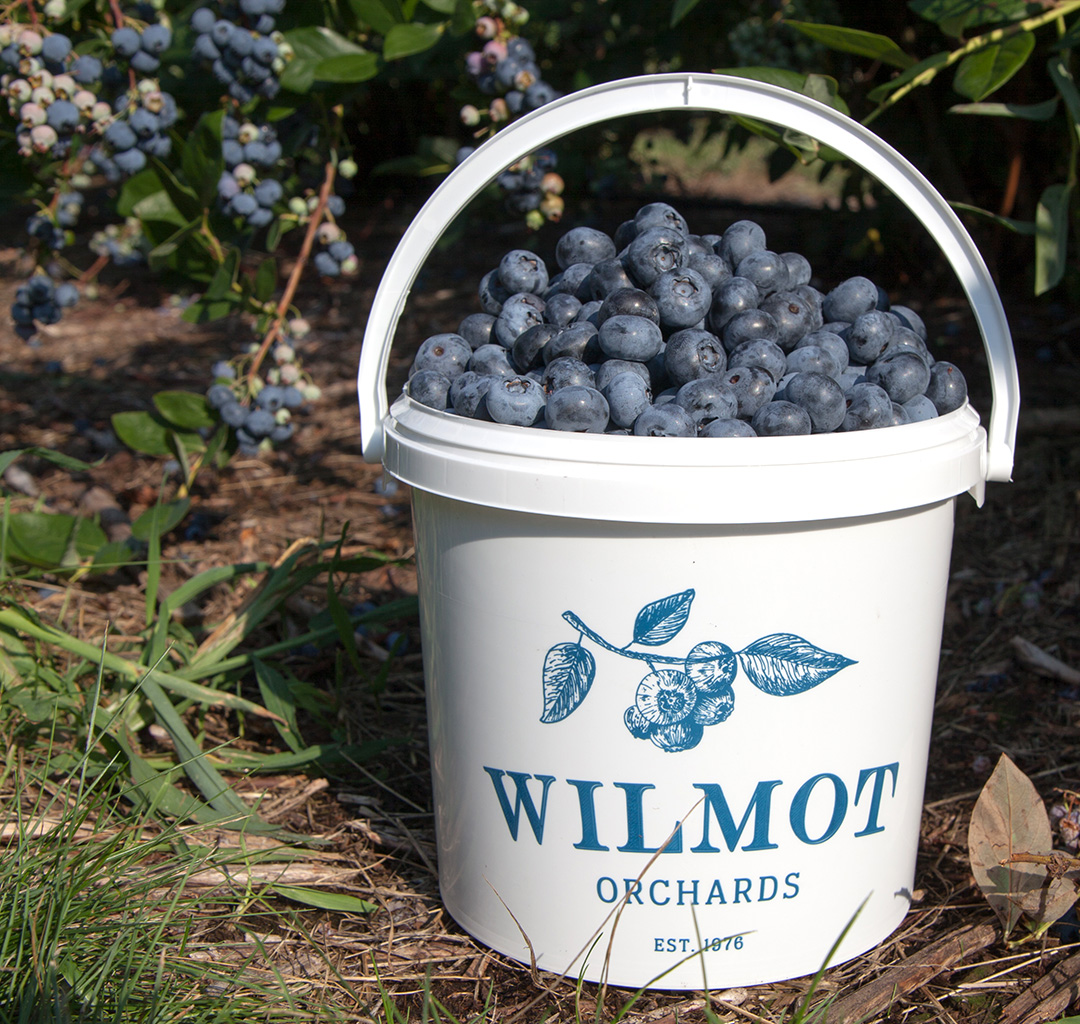
These days, the farm that 72-year-old Stevens founded, Wilmot Orchards, is a 164 acre apple orchard and a ‘pick-your-own’ blueberry farm.
He has since passed on the farm to his daughter, Courtney Stevens, and general manager Ian Parker will eventually be part of the ownership group as well.
But navigating farming in Ontario’s current market has presented Stevens with a new host of challenges, including rising production costs, price instability and land developers.
“The best thing in the world anybody ever tells you is love your job,” says Stevens. “Cause life’s short, OK? And I figured that out early in life that I Iove apples.”
The land of opportunists
Since his early days, Stevens has not been afraid to explore new farming techniques and technology.
“The key to any business,” he says, “whether it’s agriculture or anything, is adapting to new ways of doing things.”
Protecting his crops from Mother Nature is one problem Stevens has had to adapt as well.
Climate Data, a Canadian web portal that accesses historical and future climate data, says changes in climate are leading to more frequent and more severe weather events such as heatwaves, forest fires, drought and floods.
Weather unpredictability has led Stevens to purchase a hail cannon, a machine that uses sound waves to reduce the size of hail before it hits the ground.
“I’ve had it for over 22 years I’ve saved the crop at least once,” says Stevens.
He also uses GPS to plant all his apple trees and is looking into using drones to spray his crops instead of using huge tractors.
But adapting is expensive.
Navigating financial instability in todays market
There are four Business Risk Management (BRM) programs that Ontario producers have access to:
- AgriStability
- Production Insurance
- AgriInvest
- Ontario Risk Management Program (RMP)/Self-Directed Risk-Management (SDRM) – fruits and vegetable producers only
According to the Ontario Federation of Agriculture (OFA), RMP acts as insurance for Ontario farmers to receive compensation for losses caused by factors out of their control, such as low commodity prices and rising production costs.
This process can look different depending on the commodity (raw materials traded in the global market, such as wheat, dairy and beef) being sold.
“Everyone has different production requirements, marketing requirements, and in some cases, sometimes they can be in contradiction of one another,” says Mike Chromczak, the vice-president of the Ontario Fruits and Vegetable Growers Association and a watermelon and asparagus farmer.
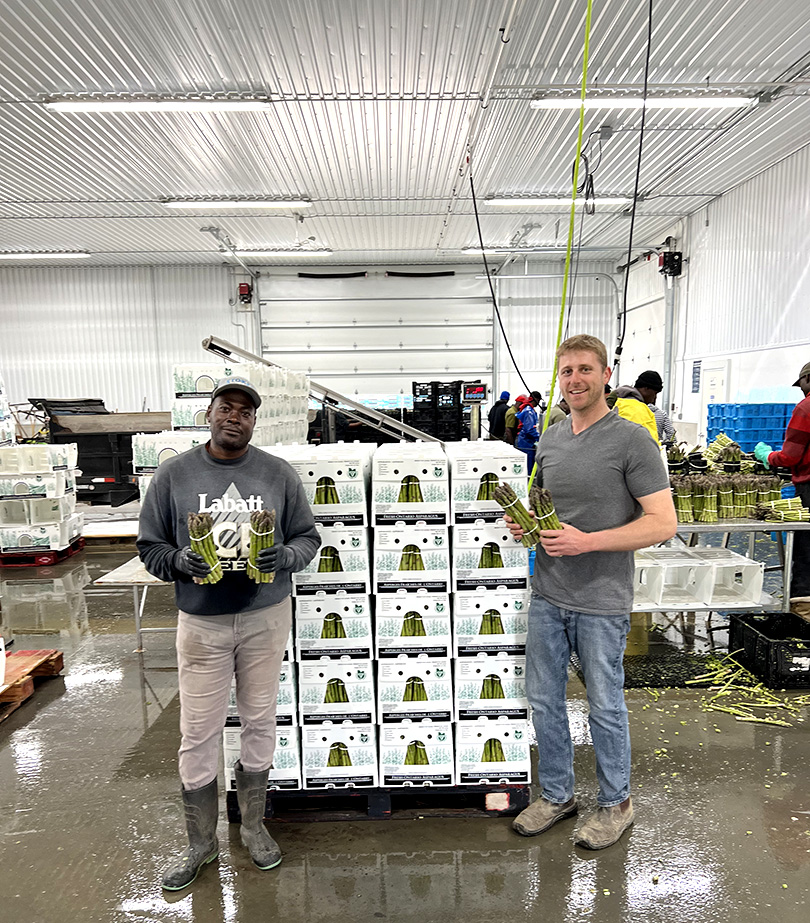
“Where one policy or ideas is good for one sector, it might not be for another.” – Mike Chromzcak
RMP is the overall umbrella program for several commodities, while the SDRM is a specific, designed for the edible horticulture sector.
“It helps when our farms stumble—when our farms have a bad year—that something’s there to catch us,” says Chromczak.
“But when we have that catastrophe—that once in a lifetime poor year—and we actually trigger AgriStability, for most farmers the program-the bar-is set so low, there’s no coming back from it. If you trigger the federal program, you’ve got big problems.”
Amplifying farmers’ voices
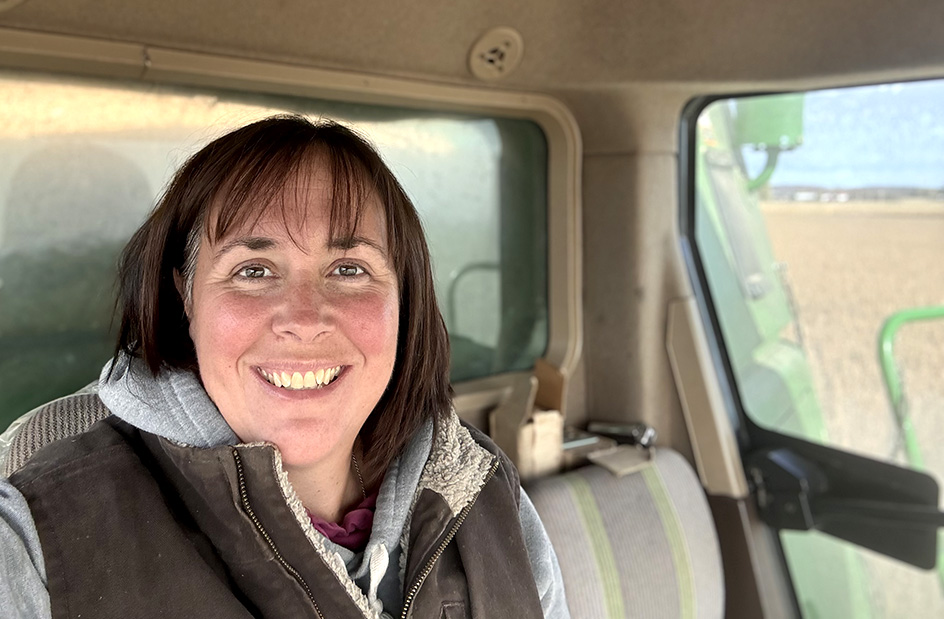
“The politicians are not on the farm. The politicians go to the grocery stores,” says Angela Field, one of the directors-at-large for the OFA board, and a dairy and grain farmer.
“I want to believe that the politicians mean well, but I think in a lot of instances when you have a very large number of people in one spot, their voices drown out the ones that are a little bit more dispersed.”
Field acts a liaison between farmers and politicians, but she says sometimes there’s a disconnect.
“Agriculture, I find, and this is sort of me not coming from [agriculture]— [farmers] traditionally and historically a quiet bunch,” says Field.
“They’re too busy out there getting the job done. They don’t realize that they actually have to start shouting, ‘no, you can’t plow over or you can’t pave over my field because I need to feed you with it.’”
Chromczak says having safety net programs can help buffer or mitigate some of that risk but with a caveat.
The funding cap for RMP is currently set at $150 million for all Ontario farmers.
“We’ve been advocating to accelerate that increase,” says Chromczak.
While the provincial government has announced an additional $100 million, it’s being spread over three years.
“It exposes us to more risk over that three-year phase-in period than we would be exposed to with it all upfront,” he says.
Field says financial instability puts stress on farm families and forces them to make difficult decisions.
“Do we buy the land and expand? Or do we try to get more quota for our eggs or our chickens or our turkeys or our cows? Or do we sell some quota to buy that land? Is that going to pay off? Do we fix the barn that is coming down around our ears? Do we go to the bank and ask for that? Or do we replace the tractor that needs replacing?” asks Field.
But even though safety nets exist, there are still big challenges facing the future of farming in Canada.
“We’re protected right now because CUSMA. If we didn’t have that right now, we’d have a lot of tariffs on our food and other products,” says Stevens. “But of course, that all going to open up and I don’t know how—depending on the negotiations—that would affect us.”
And of course, there’s climate change.
“Mother Nature would have taken the farm many, many times,” he says.
Ultimately, Field says politicians and the public need to recognize the significance of agriculture to the economy and food security and act in the best interest of all Canadians.
“Every time we turn around, it’s the auto sector and the auto workers,” says Field. “No offence to Premier Ford but the agriculture sector is actually significantly larger than the auto sector, and, you know, we’re a little bit more consistent because you can’t eat a car.”