






It begins with itchiness, soreness and redness. Blood vessels constrict, reducing blood flow to the hands, nose and ears. The body enters a state of intense shivers and breath becomes shallow.
That is the body’s reaction to cold. However, it doesn’t mean we should all stay indoors.
Winter conditions can harm the human body, causing skin irritations, frostbite, and hypothermia, while existing conditions, such as chronic lung diseases are further exasperated in the cold.
Mika Nonoyama, an Ontario Tech University professor and registered respiratory therapist, studies these ailments at the ACE (Automotive Centre of Excellence) in Oshawa.

As one of the largest climatic wind tunnels in the world, ACE simulates extreme weather. Nonoyama uses the facility to test how the human body reacts to these conditions in a controlled environment.
“There’s just not enough research,” says Nonoyama. “So the focus has been, for my research as well, not so much what’s happening in the lungs as what’s happening to the person.”
When it comes to understanding exactly how cold temperatures impact the lungs, she says more research is needed.
Nonoyama says physical activity is “the best medicine you can take in a non-pill format.”
Michael Williams-Bell, the program coordinator for the Fitness and Health Promotion program at Durham College studies how extreme heat affects cognitive decisions in firefighters.
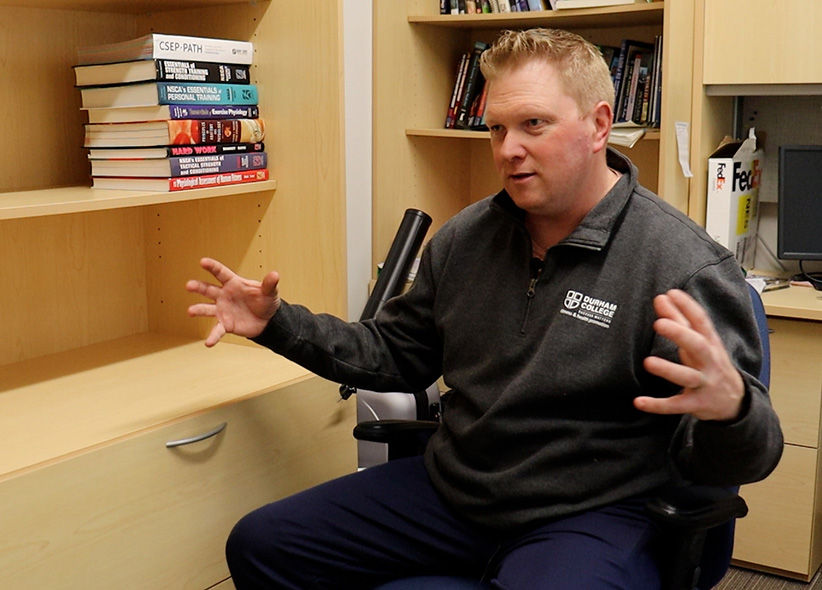
Williams-Bell says, “We can train a lot to get our body to work better physiologically in the heat, but in the cold, we don’t have the exact same capacity to adapt.”
As an occupational physiologist, Williams-Bell says exercising is a great way to counteract the negative effects of the cold.
While Canada’s winter months make it challenging to stay motivated, the Campus Recreation and Wellness Centre (CRWC) in Oshawa offers several ways for students to stay active, including the Active Living Challenge (ALC) which wrapped up at the end of January.
The CRWC started 2026 by encouraging students to be active with ALC, a four-week challenge that incentives students to stay active for at least 30 minutes a day.
Those who did were entered into a draw where they could win weekly prizes.
“The biggest thing you can tell people is, you know, everyone’s going to fail at some point. Everyone’s going to miss a day that they want to exercise. Don’t let that discourage you,” says Williams-Bell.