





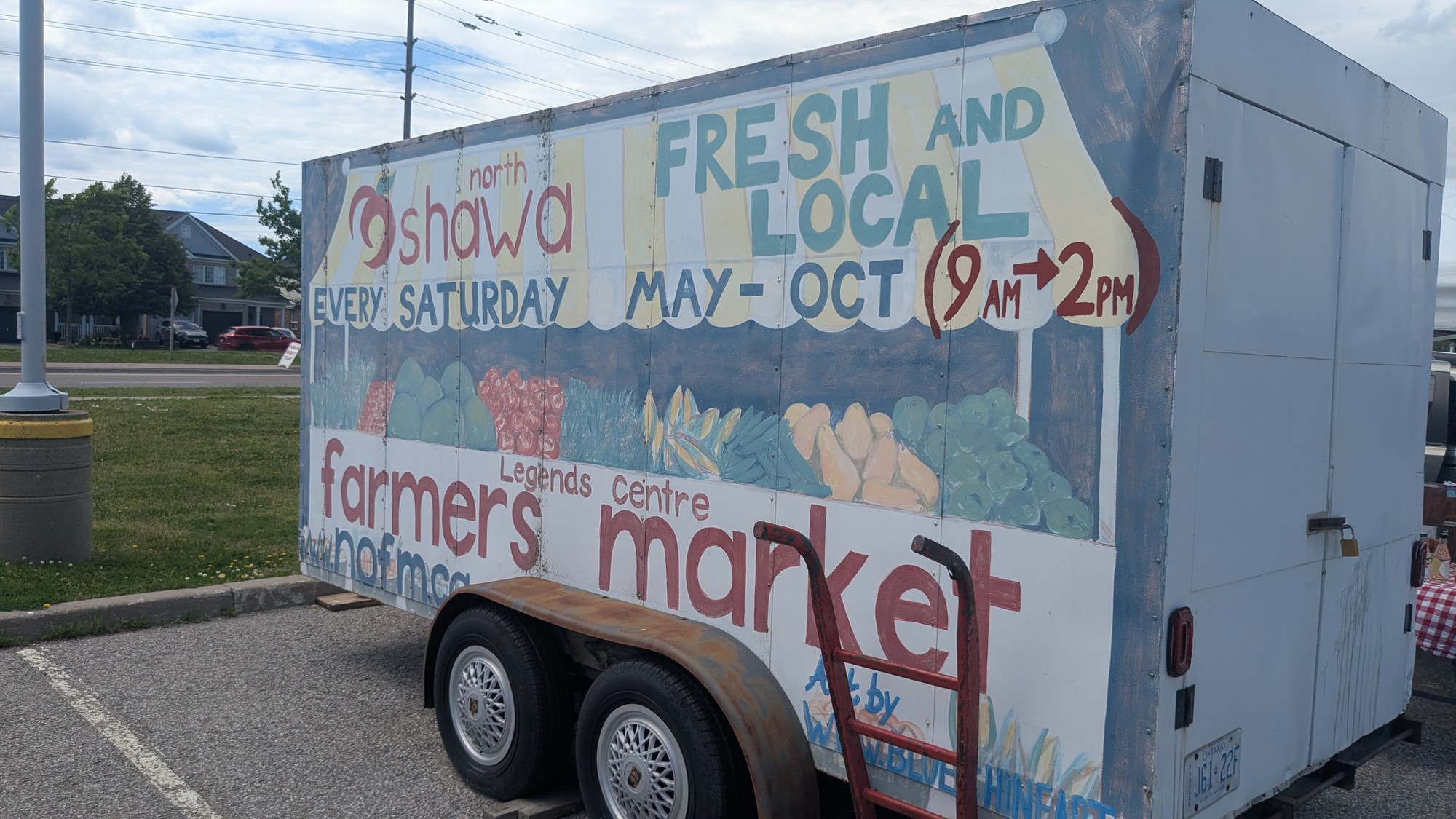
Farmers’ markets opened across Durham Region this month and for many its an important way of preserving their heritage.
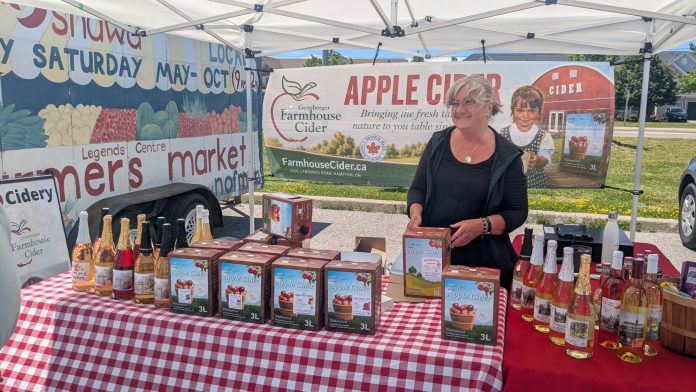
For Wanda Geissberger of Geissberger Farmhouse Cider that connection is what keeps her family’s 50‑year business thriving.
Her husband, Gord Geissberger, along with his brother Garry, own the multi‑generation cider operation just five minutes from the north Oshawa market located at the Delpark Homes Centre.
They’ve been here since the market opened in 2010.
“We’re really like a family here,” she said, while arranging bottles of sparkling cider on her table. “Our regulars come almost every Saturday. They know who made it and how it was made.”
Geissberger said a regular customer once complimented her by comparing her cider to what was available at the grocery store.
“‘You won’t find this at the grocery store,'” she recalls the customer telling her. “‘I can’t find your cider anywhere else.’ It’s really a good feeling. It’s really humbling.”
A few booths down, beekeeper Victoria Shaw of Victoria Grace & Honey Co. in Blackstock was setting out jars of golden honey.
She fell in love with bees years ago after watching bumblebees gather around a trumpet vine outside her home. What started as curiosity became a decade‑long passion and a business that depends heavily on market days.
“I make a good income from the farmers’ market,” she said. “If I wasn’t here, it would be a loss.”
Shaw says the rhythm of market life becomes second nature: early mornings, quick setups and the unpredictable flow of customers.
“Some days run smooth, some days get hectic,” she said. “But a successful day? Very busy.”
For Erik Snowden of Snowden Farms in Enniskillen, the market is more than a place to sell beef and chicken, it’s the backbone of his family’s livelihood. Snowden raises cattle and poultry with his father, continuing a business that has been part of Durham’s farming landscape for nearly two decades.
“Our bulk of our business is these markets because we don’t have a storefront,” he said.
Snowden has watched customer patterns shift with the seasons. Early in the year, shoppers come for asparagus, by midsummer, they’re looking for cherries, in the fall, it’s all about corn.
“People come out for whatever’s in season,” he said. “That’s what brings them to the market.”
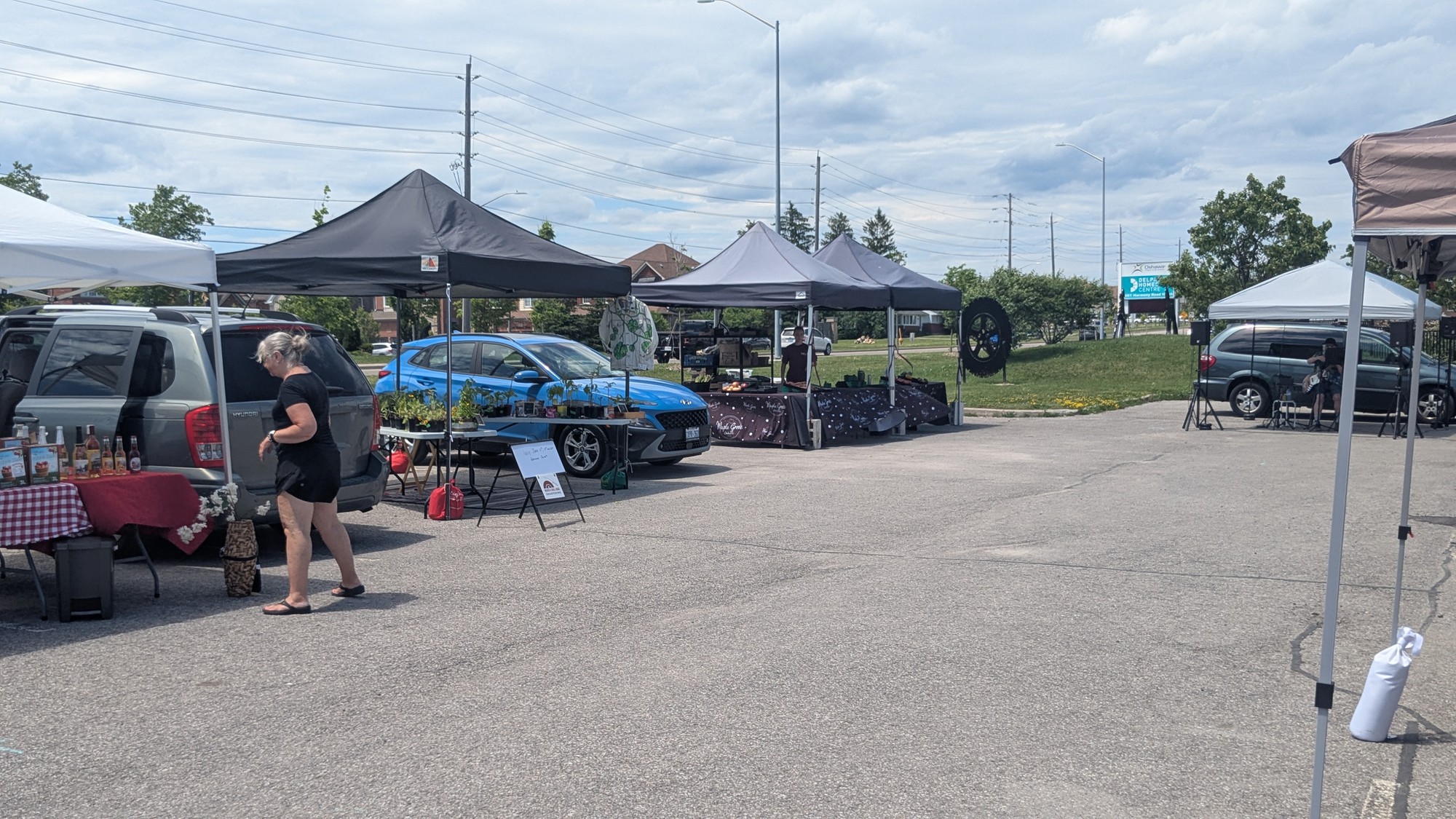
Despite the challenges, including weather and fluctuating crowds, all three vendors describe the market as a place where community and economy meet.
Durham Region’s agricultural strategy emphasizes that these markets are essential to the future of local food.
They support sustainability, reduce environmental impact by shortening supply chains and help preserve farmland by making small‑scale agriculture economically viable.
Farmers’ Markets Ontario notes that every dollar spent at a market can generate up to three dollars in local economic activity. Over the past ten years, farmers’ market sales across the province have increased by about 10 to 12 per cent annually to about $800-million.
“People really enjoy knowing who made their food,” Geissberger said. “That’s what keeps them coming back.”