






While taking a stroll down the snack aisle in a grocery store, you may have noticed a black and white icon with a magnifying glass on your favourite bag of candy.
Those labels aren’t just for show, they’re created by Health Canada.
As of Jan. 1, food companies are mandated to have front-of-package nutrition labels on foods high in saturated fat, sugars or sodium.
According to Health Canada, consuming these foods frequently can lead to increased health risks such as stroke, obesity and heart disease.
If the food has equal to or greater than 15 per cent of daily value (DV), the label will be on that product.
Toshani Persaud, a Practical Nursing student at Durham College (DC) says she hadn’t noticed the labels until it was on one of her cereal boxes at home. This made her more observant.
“I feel like being more aware when I’m in the grocery store to look at the boxes and look at the ingredients,” she says.
Brooklyn Deremo, a Nutrition Communication student from Toronto Metropolitan University, noticed something about the new labels through working on an assignment for her food and nutrition policy course.
Through her analysis, Deremo found an article which points out how the policy doesn’t align with Canada’s Food Guide because it is just looking at nutrients to avoid.
“We should be looking kind of at a focus of what to actually eat in our diet,” she says.
Some dieticians note the convenience factor of the new labels.
“I think anything that’s going to make it easier for consumers to see what they’re buying, understand what they’re buying, is going to make a difference,” says Carol Dombrow, nutrition consultant with the Heart & Stroke Foundation.
While she says people won’t change overnight, the label can encourage them to do a comparison when buying foods. An example would be picking a soup that has less sodium.
“Hopefully also it pushes them to look at the back of the label,” Dombrow says. “They may want to see how much it is and then compare it to another product.”
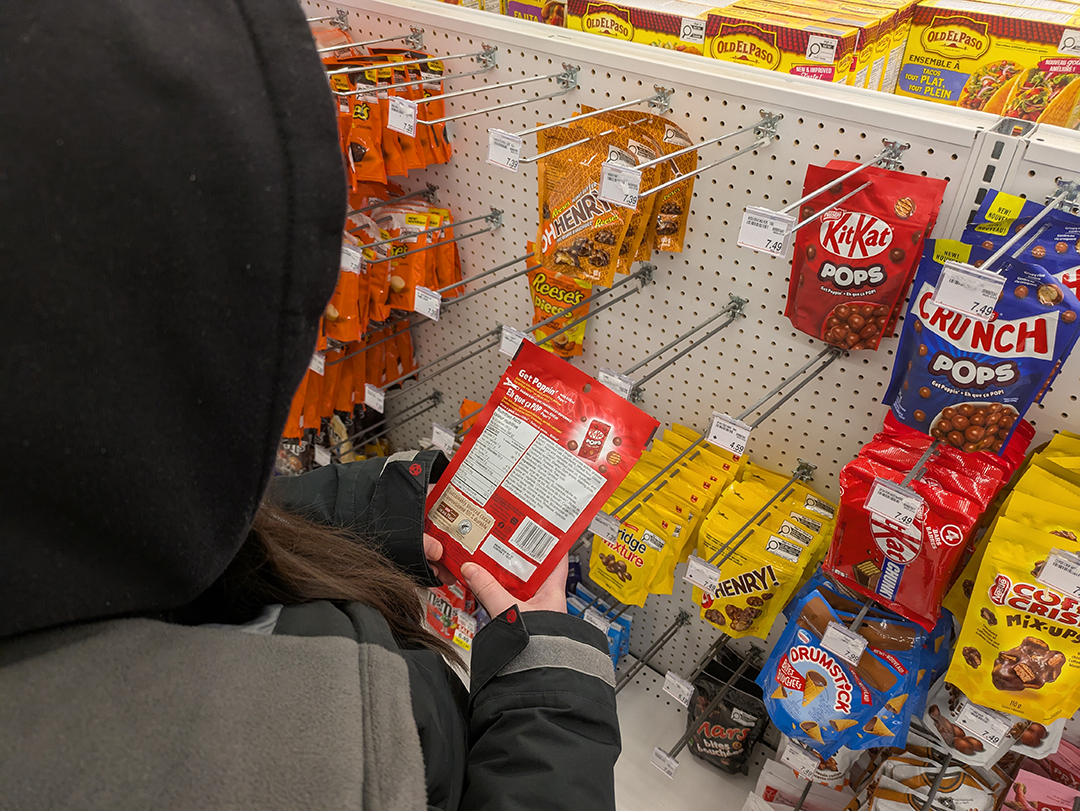
Poonam Dattani, a registered dietician and chair of Dieticians of Canada Media Network, says these labels help provide a fast way for people to make food decisions.
“We have a lot on our plate,” she says, referring to all the health information coming at people.
She uses the example of someone living with diabetes being able to use these labels as a guide to choose foods lower in sugar.
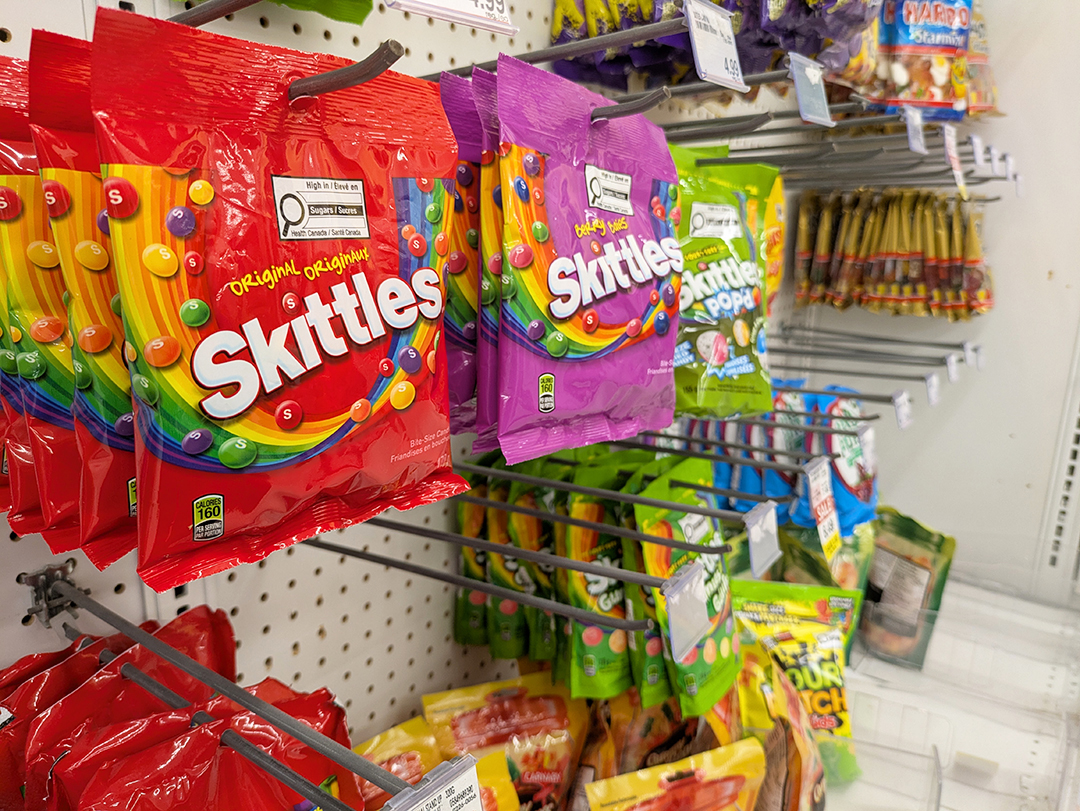
While the labels are convenient, there can be confusion. Dattani explains people may look at the “high in” symbol and wonder if it’s for the entire package or just a portion.
Dattani says looking at daily value in a nutrition label can help.
If the product is high in sugar, Dattani recommends looking at the nutrition facts table and see what the serving size is.
“Maybe it says for three tablespoons, the sugars are high or above the 15 per cent of daily value,” she says. “Ask yourself, are you going to have three tablespoons?”
By looking at the serving size, it is possible to enjoy these foods in moderation.
“Food is not limited to its nutritive value,” Dattani says. “It has emotional value, it has social value.”
This is why Dattani recommends using the new front-of-package labels as a tool rather than a deterrent.