




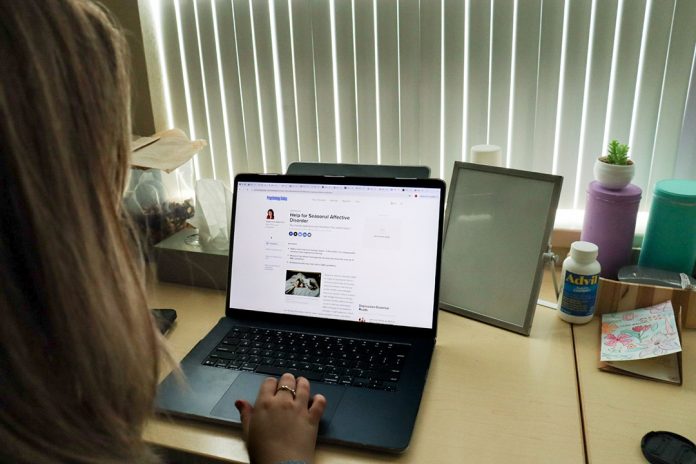

Some students at Durham College and Ontario Tech University are finding creative ways to stay positive during the winter semester.
“I try to keep myself positive with hot cocoa or coffee. And I usually just sit inside and cuddle with my cats,” says Mars Lauchlan, a Durham College Early Childhood Education student.
Seasonal Affective Disorder, also known as SAD, is a type of depression that often happens during the same season each year, most often in the fall or winter.
About 2-3 per cent of Canadians will experience it in their lifetime, according to the Canadian Mental Health Association, while another 15 per cent will experience a milder form.
Jessica-Lee Bender is the Health Promotion Coordinator at the Campus Health and Wellness Centre.
Bender says SAD can be common in the winter as there is less sunlight, people are not eating as much fresh fruit and vegetables and they have lower activity levels.
“So, probably one of the biggest things is getting outside, seeing sunlight when you can, and just connecting to kind of nature and being out, socializing, making sure that you’re kind of not just staying inside your dorm room and staying isolated,” she says.
According to the Canadian Mental Health Association, sunlight affects the brain’s ability to maintain normal levels of serotonin, which is the chemical that helps regulate mood.
With less daylight in the winter, those with SAD may experience lower vitamin D levels, further reducing serotonin in the brain.
A way to mimic sunshine is white light therapy, according to Medicine Journal. White light therapy reduced the symptoms of SAD in 87 per cent of patients.
“Part of combating the winter blues, you do this by moving your body, so I would recommend participating in our free group fitness classes that happen Monday through to Friday,” says Brianna Christopher, the fitness coordinator for the Campus Recreation and Fitness Centre.
Thirty minutes of activity a day can release endorphins to reduce the effects of SAD, according to Psychology Today. Outdoor activities are especially important as they expose people to natural light.
On campus there are two channels for students to receive help.
“If someone is looking for supports, they could get connected with either one of our doctors to talk about supplementation,” says Bender. “Any kind of vitamins or minerals or things that they might be missing, they could get their blood work done.”
There is also mental health support. Students can book a 20-minute appointment where they are assessed based on their needs and the health team will guide them from there.