




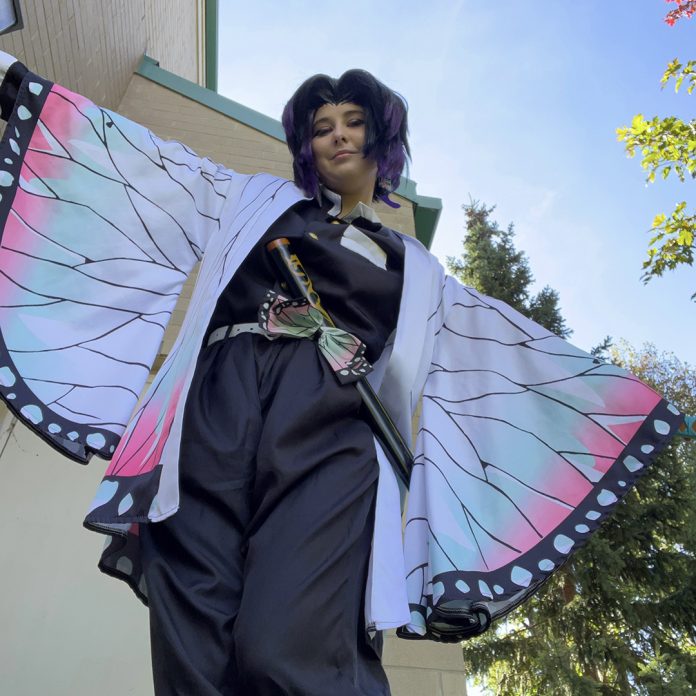

It was 2022 and Durham College’s Anime United Club was hosting their first Cosplay Cafe. Twin sisters Ai and Zo Rahmanyar had gotten the idea from the anime trope of cafes and maids, but had to make adjustments to avoid risque connotations.
Co-ordinating their costumes, the sisters opted for all-black attire to match the specific edition of their characters. They searched for pink wigs and tailored them by cutting off a braid to mirror their blueprints.
Adjusting, tucking and sewing the ends of a black kimono and classic maid costume for a comfortable yet transformative fit.
Ai and Zo Rahmanyar had become Hisui and Kohaku from the 2021 remake of the anime game series Tsukihime.
Although both sisters had admired cosplay, this was their first time experiencing all it offered.
“You don’t even have to pretend to be the character. Just putting on the outfit and enjoying it with friends is just the one thing that really brings it out for me,” said Zo Rahmanyar.
“It feels like another way to show my appreciation for the things that I love, especially as someone who used to be bullied for liking anime, putting on a costume and being accepted by other people, it’s another way of embracing that it’s okay to like what I like,” said Ai Rahmanyar.
Since the western popularization of cosplay in the 1990s, the culture has continued to grow in acceptance, community and the media.
From Vivienne Westwood’s Nana-inspired collection to the anime origins of Sonic the Hedgehog, elements of the culture that were once perceived as nerdy or juvenile are now highlighted and embraced by the public.
Embodying anime and superheroes in real life has been a source of connection, creativity and escapism for decades. Before its popularization in the West, anime fans in 1970s Japan would openly dress up as their favourite characters.
“If you feel really in tune with the character, you add some lore-accurate part,” said Ai Rahmanyar.
In 2018, the University of California published a study exploring the social, psychological and behavioural aspects of cosplay. The study found 33.5 per cent cosplayed for fun while 25.2 per cent did it for creative expression.
More than 929 adult cosplayers from diverse demographics were involved in the survey. Many participants described themselves as introverted in their everyday lives, but somehow came out of their shell when disguised as a character they admire.
“Some people, when they are cosplaying, they might cosplay someone who is very much different from themselves,” said Comic Studies Specialist and Durham College Instructor Elisabeth Pfeiffer.
When it came to reasons for character choice, 59.3 per cent of participants selected based on an aspect of a character’s personality. This was the majority.
In 2012, researcher Hajo Adams and psychologist Adam D. Galinsky released a study on what they coined as enclothed cognition theory. The hypothesis tested how clothing influences behaviour, specifically clothing with symbolic value.
In the study, some participants wore medical lab coats while others wore painter’s coats while doing a series of Stroop tasks where they aimed to name coloured words as quickly and accurately as possible.
The results showed participants in doctor’s lab coats had increased selective attention compared to participants in painter’s coats.
Pfeiffer says she often sees cosplayers adapt the bold characteristics of their characters.
“When somebody puts on the domino mask of Harley Quinn, they become more vivacious! Somebody puts on the mask of Black Panther and the claws, they’re gonna make those poses,” said Pfeiffer.
She adds reactions to costumes could also influence behaviour, as people get excited and treat the person as if they are that fictional character.
Ai and Zo have seen this at cosplay events where people wearing familiar costumes will approach each other and talk as if they are in the fictional worlds their characters come from.
“We’ve all played pretend before. There’s adults who still play DND, it’s okay to have an imagination,” said Zo Rahmanyar.
Ai Rahmanyar connects this to live-action roleplaying (LARP) where people dress up as their own made-up characters and act out those roles with each other.
“It’s cool to see that cosplay isn’t necessarily restricted to anime or Asian culture. It’s widely versatile,” she said.
Despite the expansive community, there is also gatekeeping and fandom culture that can cause tension. Possessive ideals of a character can cause fans to bully cosplayers who don’t portray the characters to their liking.
On Nov. 13, the passing of Black cosplayer Ashley Paxton was confirmed on their instagram account, leading many to believe it was a suicide due to cyberbullying.
The 19-year-old who went by the name Squidkid1111 received death threats, racist comments and penalization online for cosplaying non-Black characters, with complaints that her portrayals were inaccurate because of her skin colour.
This raised the conversation of exclusivity in a community that celebrates variety and innovation.
While gatekeepers may use accuracy as an argument for exclusion, many Black cosplayers see it as another way to surpass boundaries while remaining in their Black identity.
“It’s kind of unlimiting the realms of possibility…in cosplay there’s no limits. Let’s blow up those limits and do what we want,” said Pfeiffer in reference to Black cosplayers dressing as non-Black characters. She said many use cosplay as an area that is unlimited by oppression.
Limiting ideals are often a source of anxiety for cosplayers. Despite the love and liberation they experience through the crafting process, showing it to the outside world is another feat.
“I gotta make sure not to ruin my cosplay…am I ruining the character for somebody else?” said Ai Rahmanyar.
Zo Rahmanyar also added how social media standards have shifted expectations. A friend of hers has even gotten negative comments for not having professional photos of herself in costume on her Instagram page.
“A lot of people will face backlash. It’s the unfortunate thing, but at the same time I think it’s more brave that you’re coming out in costume,” said Zo Rahmanyar.
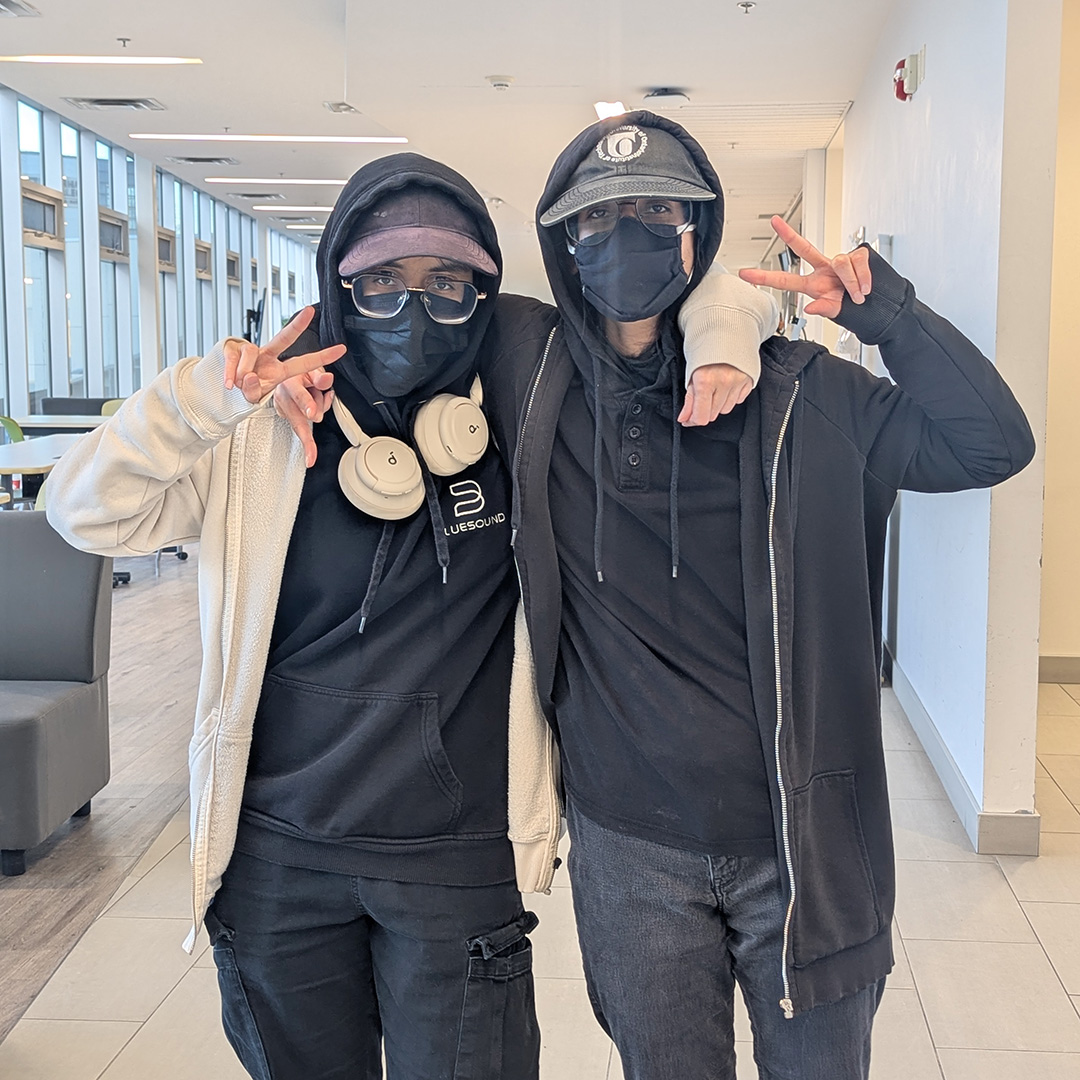
Cosplayers like Ai and Zo use their costumes to face anxieties and find fun on the other side.
The art of cosplay encapsulates escapism, free expression and adornment, pleasures that people seek in everyday life but struggle to find as adults.
These qualities continue to grow in the public eye and encourage cosplayers to explore themselves while returning to their playful instincts.
As Pfeiffer said, “The ability to pretend and be child-like like that just keeps our joy.”