




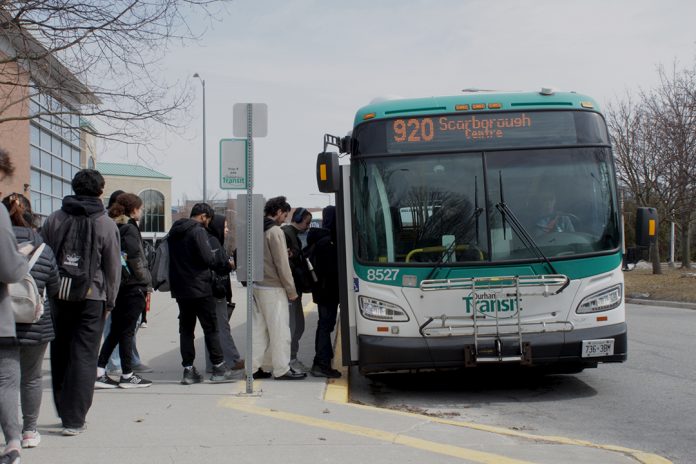

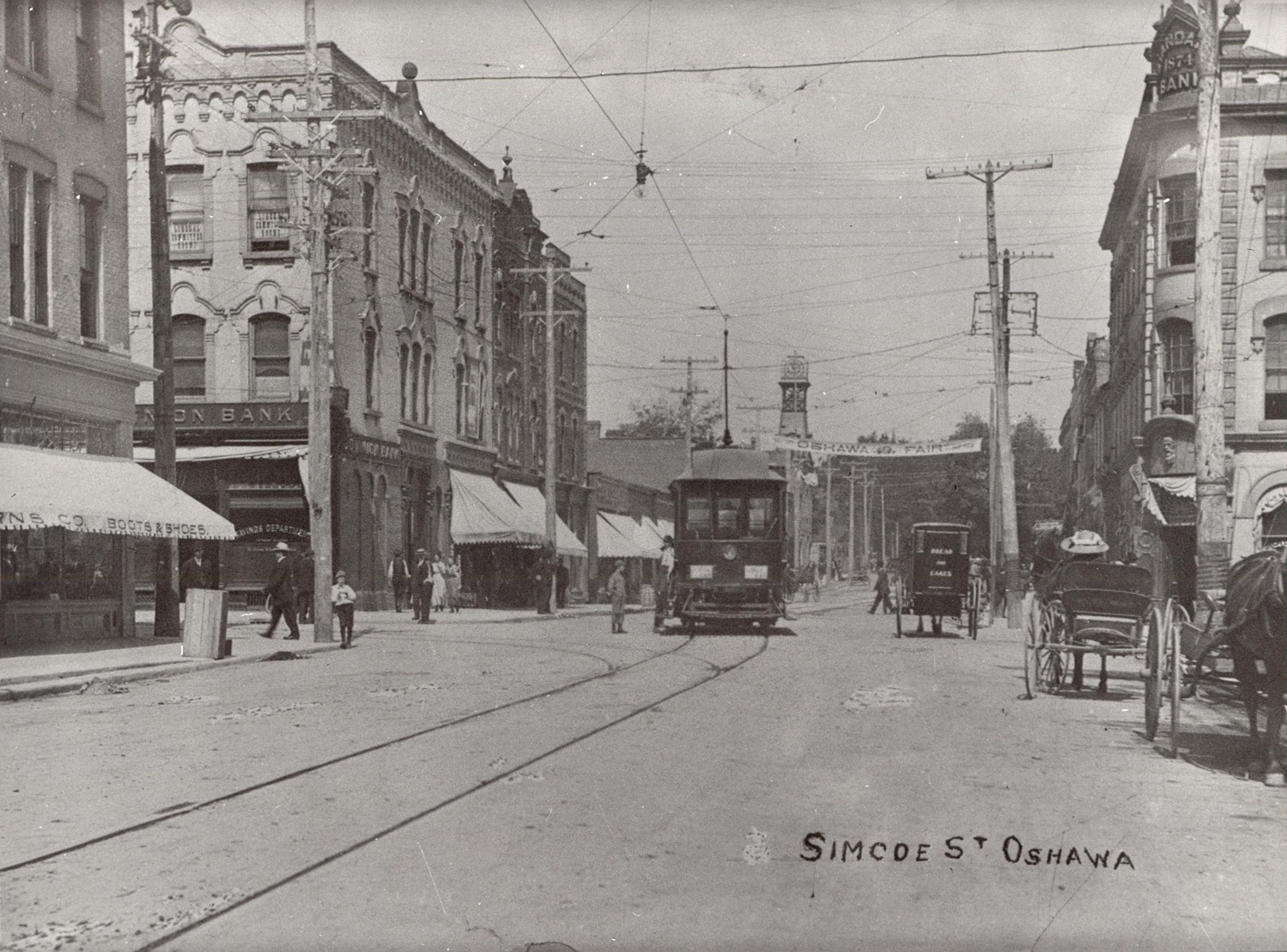
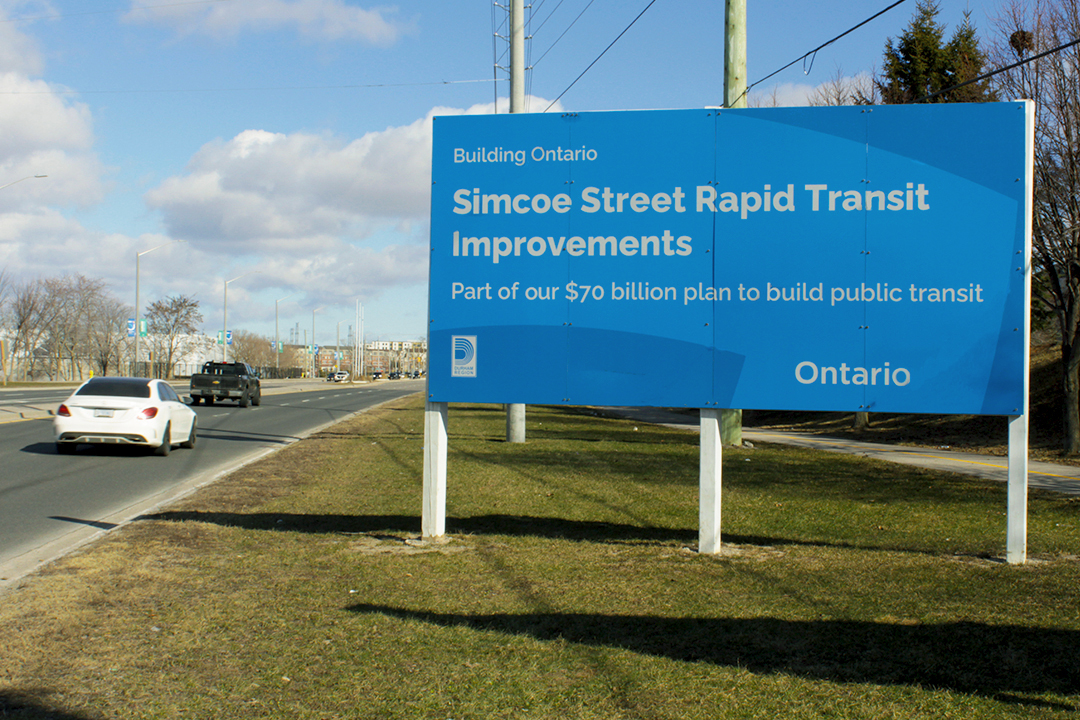
Simcoe Street is one of the oldest streets in Oshawa and one that has gone through some of the most changes. Once entirely farmland, it’s now a hub for shopping, eating and, especially, transit.
With those changes has come more people in need of efficient ways to get to and from work and school.
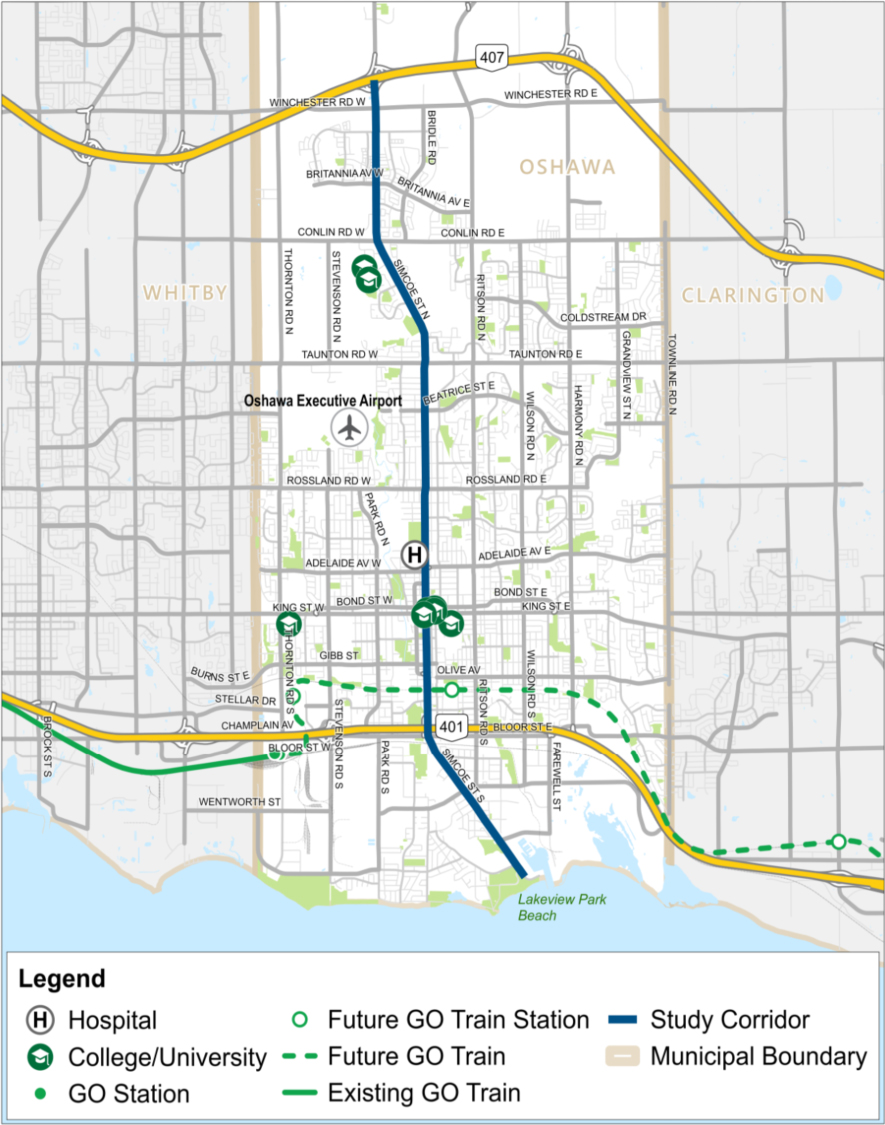
Four years ago, the city introduced the Rapid Transit Visioning Study. Although it’s still under review, some residents and councillors have concerns.
In 2022, the study launched to determine which future Simcoe Street transit options appealed most to Oshawa residents. The two that gained the most popularity were bus rapid transit (BRT) and aerial cable car transit (ACCT).
Both would take commuters along Simcoe Street, with stops beginning at Highway 407 and ending at Lakeview Park, in an attempt to relieve traffic congestion along the busy street.
According to the July 2022 Simcoe Street Cable Car Feasibility Study, cabin evacuation, mesh over windows, vandalism-resistant design and video and audio surveillance are safety precautions under consideration.
The study also plans to explore projected safety concerns from future passengers, including ACCT performance during severe weather and power outages, accessibility for those with a fear of heights and handling maintenance repairs.
Oshawa Ward 4 city councillor, Rick Kerr, says there is more to be considered if this project goes ahead.
Kerr, who also serves as regional council representative on the Durham Active Transportation Committee, says the proposed safety feature of using opaque glass when the aerial car passes by private buildings may cause more harm than good for some people.
“If I’m a single woman, and I’m sitting there in this gondola with a man and those windows, what’s to stop me from being sexually assaulted between Adelaide and Rossland?” says Kerr. “Or [what if] somebody has a heart attack. How are they going to get up there? And when?”
He says running a pilot project along Ritson Road with more buses may lead to similar results without sacrificing safety.
“It’s our job to provide for a safe, healthy environment,” says Kerr. “We’re not in business to make mistakes, we’re in business to give the highest possible level of safe service to all residents of Oshawa equally.”
Kerr also says his pilot project would cost a fraction of the estimated $1.1 billion cost of the ACCT and would not remove lanes from Simcoe Street like what is for the estimated $800 million BRT.
So far, approximately $8 million in funding has been set aside for the Simcoe Street corridor study, with additional senior government funding to be addressed in the future.
Some Durham College (DC) students agree with Kerr, but many are unaware these changes may be coming to Simcoe Street. Those who are aware have mixed feelings.
Phoenix Crosier, a DC Photography student, says she wouldn’t feel safe crossing into the middle of the street to get to the aerial car, something that Kerr says is in the proposed plans.
“I don’t like crossing the street in general and I have a few friends who have been hit crossing the street completely legally,” she says.
Crosier, as well as DC Police Foundations student Roxyanne Usman, both have a fear of heights that may get in the way of using the aerial car.
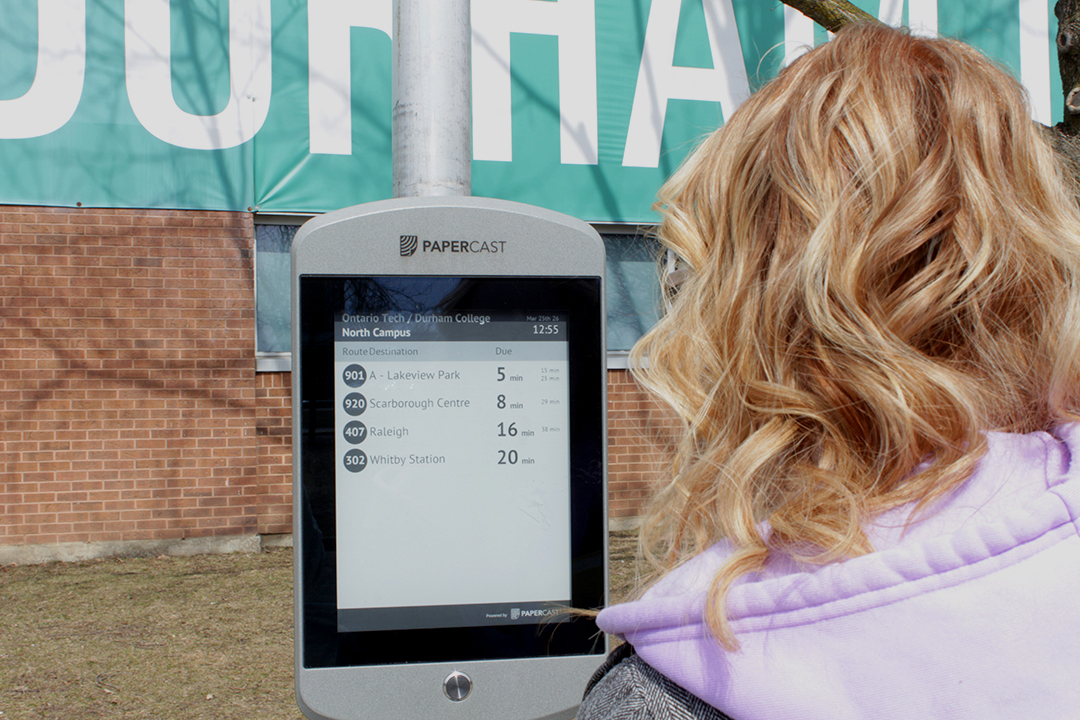
However, one thing both agree on is that something needs to change with transit in Oshawa because of the lack of reliability when taking a bus along Simcoe Street.
“I’ve been noticing that the buses come earlier than they say on the app, or they’ll be delayed by 20 minutes,” says Usman. “[Sometimes] it just doesn’t show up at all.”
DC Computer Programming and Analysis student, Joel Heickert, says there needs to be more transit options in Durham Region, whether that includes ACCT and BRT or not.
“I used to be able to drive, but I developed epilepsy, so I can’t drive now,” says Heickert. “I have to rely on public transit, so I would really love any way to improve [it] in Oshawa and the Durham region in general.”
The transit study will soon enter the Environmental Assessment (EA) stage, which will evaluate traffic conditions on Simcoe Street and identify specific traffic operations and safety improvements.