




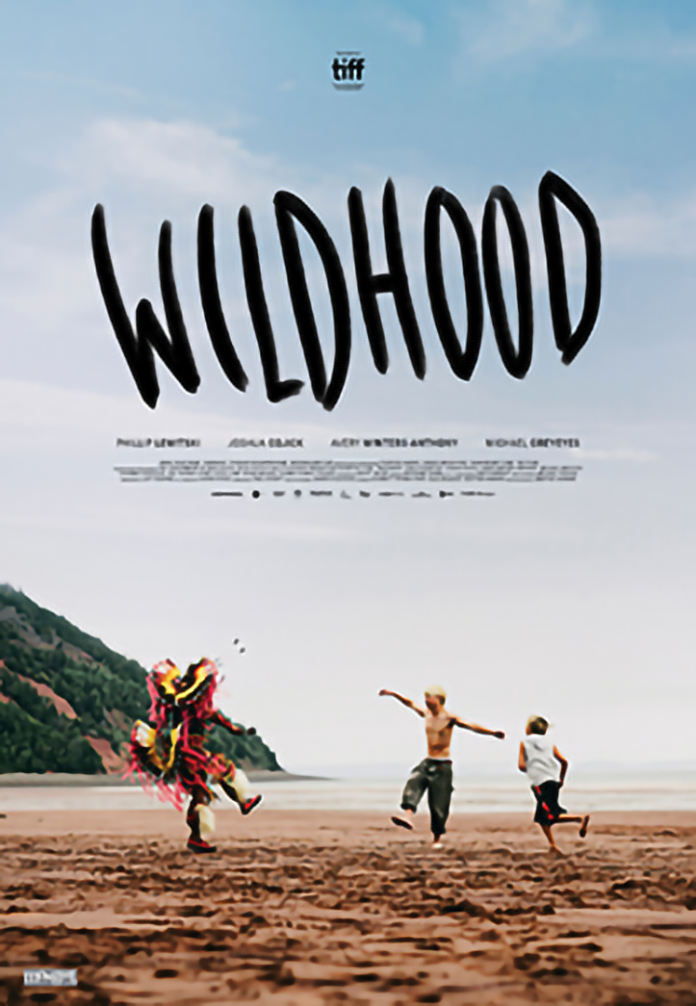

Wildhood (2021) is a beautifully shot coming-of-age, road-trip quest film with dialogue both in English and Mi’kmaq.
Directed and written by Bretten Hannam, the two-spirit, non-binary Mi’kmaq filmmaker reimagines his 2019 short film “Wildfire.”
Although visually a stunning piece, full of symbolism and meaning through colour, angles, pace and mise-en-scène, the Indigenous and queer film lacks substance.
The film follows Lincoln “Link” (Phillip Lewitski) and Travis (Avery Winters-Anthony) after they escape their abusive dad, played by Joel Thomas Hynes, and embark on a journey in which Link explores his sexuality, Indigenous identity and discovers family secrets.
The film is set in an unspecified trailer park in Mikmaki and opens with short close-up shots of the brothers’ surroundings. Travis, the youngest of the siblings, dyes Link’s hair goldilocks blonde in a small dark bathroom, with specs of dark blue and earth colours across its tiles, walls and toiletries.
The bathroom is suffocating, representing Link’s own feeling of entrapment.
This sequence also mirrors the closeness of the brothers and their individual personalities.
The energetic, combative and unfiltered personality of Travis, who wears a white eyepatch to cover his left eye and always carries Link’s old, dirty backpack, and the more serious nature of Link, a seriousness more imposed than inherent in him.
Link, shirtless, with a slightly toned body and smooth, pale skin, is consequently shown rinsing the “fake blonde” hair dye. Water pours over his head, with drops dripping onto the sink.
Alternating between slow, atmospheric scenes and fast-paced ones that propel the narrative forward, the film’s initially delicate rhythm shifts when the brothers attempt to evade the police after being caught stealing thin copper tubes from an abandoned, concrete building.
In a state of unconsciousness following the altercation with law enforcement, the flow of the film returns to a nostalgic and intimate sequence of green blurry shots of a human-like figure holding a baby surrounded by big trees and a low hum, joined by a soft string instrument.
Once home, Link’s father grabs him, yanking him by his “goldilocks” blonde hair, while shouting, “You want everybody to think you’re a fruit, huh?”
“Goldilocks,” a succinct and punchy way, the father shows disapproval of Link, femininity and vanity, as seen by Arvin. The loaded ‘nickname’ aims to shame the teenager, who is then dragged by his father out of the frame.
Now in his room, Link is overtaken by anger and lashes out, striking everything within reach. Bruises mark his smooth, pale skin, evidence of Arvin’s “discipline.”
This tense moment is balanced with a tender shot of Travis caring for Link’s bruises while the eldest cries.
Dale (Steve Lund) Links’ uncle asks him, “Do you have an eye on anyone at school? Gotta be some girl you have the hots for … or someone.”
In this short interaction, Dale shows his acceptance and care for Link, while also giving him the time and space to figure stuff out on his own.
A rushed, high-stakes conflict between Link and Arvin leads him to discover his dad lied about Link’s mom’s death.
This sparks the journey of the brothers in hopes of finding answers about Link’s mom, connecting with his Mi’kmaq ancestry and noticing firsthand colonial and discriminatory beliefs are still very much alive.
The trip might be a path to even find love with Pasmay (Joshua Odjick), a Two-Spirit travelling powwow dancer estranged from his family.
As a queer film, it has several shortcomings. It leans on familiar narratives, with the only difference being the director waters them down by insinuating them. A lot is left out of frame in the film and open to interpretation.
The viewer is left to infer what is happening when Link is dragged away and punished, when uncle Dale tries to be an ally, and later, when Link develops an intimate and romantic interest, while also including drag performers as background characters, as if it were groundbreaking.
The film faced a difficult, but attainable goal: show the hardships of being queer, without falling into trauma-only narratives, hypersexualized coming-out stories. Showing gay relationships of any kind, without stereotyping proved a challenge; and in this case, portraying intimacy—particularly Two-Spirit intimacy, considered sacred and natural in many precolonial societies—without reinforcing the idea gay men are promiscuous, or representing a straight version of queer dynamics.
Every kiss or sexual act between the love interests is filmed at night, making it difficult for the viewer to appreciate queer love while also reinforcing the idea that queerness must remain hidden.
Avoiding essential aspects of queer experience is evidence the film is not made for the queer community, but instead, made for the comfort of a mainstream audience, who will remain blissfully unaware of the diversity of queer dynamics, rendering queerness foreign and abstract, even for the best ally. There was not a single douche, lube, condom, PrEP or Doxy-PrEP on the set of Wildhood.
Omission may be intentional, as the film is grounded in Mi’kmaw Two-Spirit identity, which extends beyond physical acts to position intimacy as natural, spiritual, and embedded in relationships and the land.
From this perspective, the film can be read as rejecting Western, risk-focused narratives that medicalize queer sex and place it under constant surveillance, instead of presenting intimacy as lived, felt, and sovereign.
Although the film includes shots that support this reading, where the land and environment emerge as their own character, growing and shifting alongside Link, it is ultimately underdeveloped, leaving that connection more implied than fully realized.
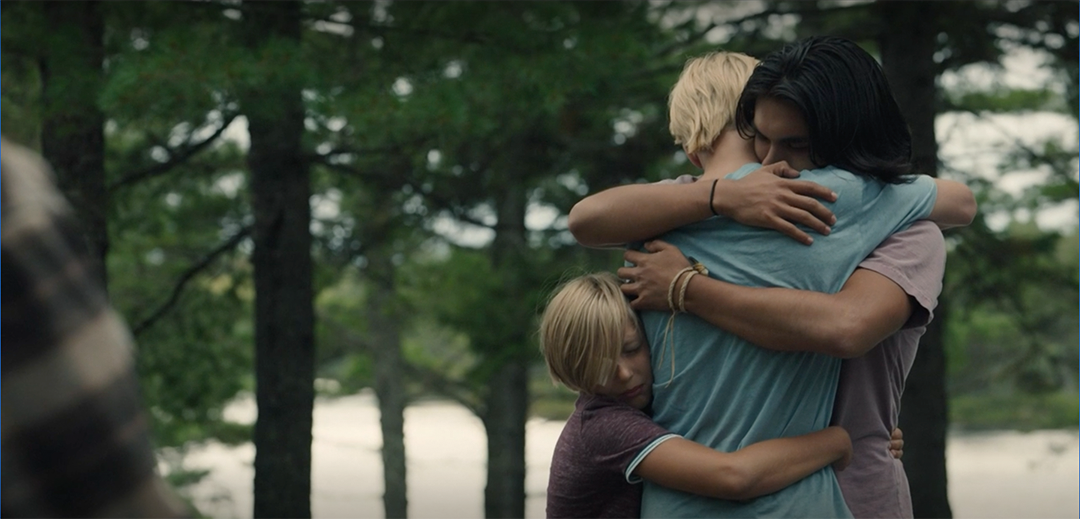
Just as mainstream audiences often lack knowledge of queer experiences, they are similarly unfamiliar with Mi’kmaw Two-Spirit frameworks.
QBIPOC media—work that represents marginalized communities, such as queer Black, Indigenous and people of colour—carries a particular weight.
For many audiences, it may serve as their only point of reference, which makes it all the more important for these stories to be direct, visible, and intentional in what they choose to show and say.
Wildhood seems to be performing for a mainstream audience, sanitizing its stories to fit what is comfortable or familiar to ‘outsiders’.
Queer and Indigenous media have the potential to break from the standards and conventions used on screen again and again.
Wildhood fails to do that.
But is a great first step.