




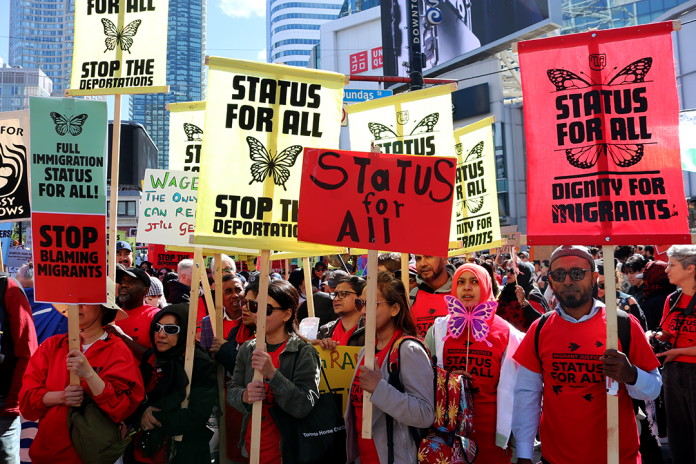

Debate over Canada’s Temporary Foreign Worker Program (TFWP) has intensified in recent years, as concerns over unemployment, wages and working conditions have collided with growing labour shortages.
While some argue the program allows employers to rely on lower-paid migrant labour, potentially displacing Canadian workers and suppressing wages, others point to policy changes tightening eligibility and enforcement.
While that debate continues nationally, it does little to change the reality on the ground in Durham Region – especially with spring planting just around the corner.
“We’re never going to find a local employment base who’s going to fill the workforce that is currently provided by temporary foreign workers because it’s just so significant,” said Stacey Jibb, manager of Agriculture and Rural Economic Development at Invest Durham.
According to a 2022 report from the Durham Workforce Authority, the region’s agricultural workforce totals about 2,650 workers.
Of those, roughly 32 per cent, or about 850 workers, are general farm or greenhouse labourers.
Mitchell Morawetz, president of the Durham Region Federation of Agriculture said fewer than five per cent of Durham’s farms, or about 55 of the 1,100 operations, use temporary foreign workers.
However, he said those farms account for roughly half of the total workforce.
That concentration has made the program a focal point for both labour advocates and industry groups.
Jeff Tomlinson, secretary-treasurer of the Durham Region Labour Council, argues the program allows employers to stabilize labour supply with lower-paid workers while suppressing wages and working conditions.
“It creates slavery-like conditions for the people who are doing the work,” he said.
The issue is relevant in Durham where agriculture is a major economic driver.
The region contributes about $354 million to Ontario’s total farm production value, according to Jibb.
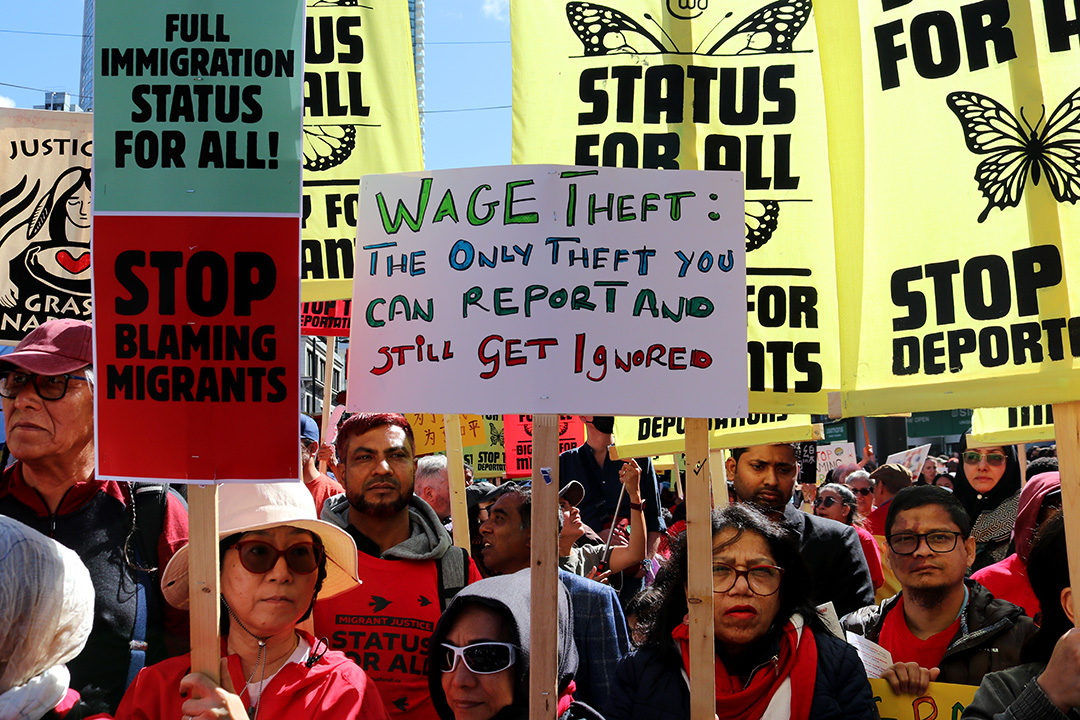
Amid rising anti-immigration sentiment and stricter policies, Tomlinson argues the same system harms both Canadian and foreign workers, but migrant workers are often “scapegoated for wider social problems.”
Morawetz, points to another factor: low wages discourage Canadians from entering agricultural work. He said the industry needs more investment and more access to loans to afford higher wages.
Tomlinson says that dynamic contributes to labour shortages, which are then used to justify bringing in temporary foreign workers willing to accept lower pay, further depressing wages and conditions.
“Providing status and basic human rights to all people lifts everyone up,” he said.
Origins of a decades-old program
The TFW program itself is not new.
A local government study shows Durham Region has long been a destination for immigrants.
The national program dates back to the mid-1960s, beginning as a bilateral agreement with Jamaica. It later expanded to more Caribbean countries and Mexico.
Originally designed to address agricultural labour shortages, the program has since become embedded in Canada’s broader labour and migration system.
During the COVID-19 pandemic in 2020, shifting immigration patterns and labour shortages renewed concerns about unemployment, working conditions and exploitation.
The role of foreign workers on Durham farms
Despite criticism, industry representatives say foreign labour is essential.
“Temporary foreign workers and seasonal agricultural workers are critical to Durham Region’s agri-food sector and our food supply,” Jibb said.
Morawetz agrees, saying farms would struggle to operate without them.
Foreign workers perform a wide range of jobs, from planting to harvesting, often in physically demanding conditions and extreme heat as shown by research and other reports.
“Without the labour that is presently available, it simply wouldn’t be possible for farms in the region to do what they do,” he said.
Without that workforce, he added, Canada would rely more heavily on imported produce.
For Mary Drummond, chair of the Durham Food Policy Council, both reliance on foreign labour and increased imports challenge local food sovereignty goals as stated in Durham Region’s Food Charter.
Durham’s population “has no desire to work in agriculture,” she said, although encouraging local participation is a key priority for both the Food Policy Council and Invest Durham.
Morawetz, however, frames the issue differently.
“It’s not a lack of interest,” he said. “There are a lot of jobs to fill in agriculture.”
He cites a 2017 University of Guelph report estimating that for every graduate from an agricultural program, there were four available jobs.
The Canadian Agricultural Human Resource Council estimates the agricultural labour shortage will grow to more than 101,000 by 2030 from 87,700 workers in 2023, a 15 per cent increase.
Even if foreign workers fill most roles, crop production is expected to remain the sector with the highest number of vacancies.
An aging farming population is a key factor, along with what the council describes as the need to improve perceptions of agriculture as a career.
Tomlinson agrees the issue is structural.
“It’s not that it’s an unattractive occupation,” he said. “It’s a difficult occupation that’s stretched to the limit.”
He points to industry consolidation, reduced competition and pressure on smaller farms.
Jibb also notes a broader trend: fewer farms but larger operations.
Those large-scale farms, she said, rely heavily – sometimes “almost 100 per cent” – on offshore labour.
Data gaps and policy tensions
Data gaps remain a concern, particularly around the number of temporary workers on farms in Durham Region.
“Without that data, I don’t know how we can make informed decisions,” Drummond said.
In its Food System Report Card, the Durham Food Policy Council calls for better public data on employment conditions, labour issues and the well-being of foreign agricultural workers.
“Coming to Ontario for $17 an hour might look appealing,” Tomlinson said, “if your other option is working in a sweatshop.”
Calls for reform
The Durham Region Labour Council is advocating several reforms, including extending employment standards protections to all agricultural workers, increasing minimum wage and granting permanent status to migrant workers.
For Tomlinson, the issue is fundamental.
“It’s a two-tiered system where some people are considered full humans and some people are not,” he said.
“Human beings are not temporary — and workers are human beings.”