




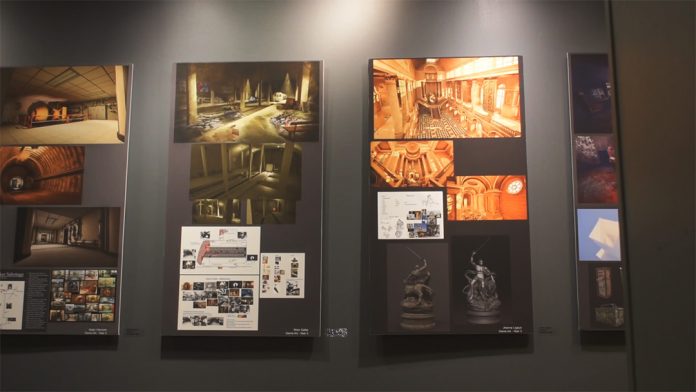

Game – Art students had their work featured in Whitby’s Station Gallery this semester, showing various methods, styles, storylines and themes.
The gallery housed the Durham College Game Art Exhibit from Jan. 24 to March 8.
Program coordinator and professor Edin Ibric said it was not only a great opportunity to show what the students are capable of but also to give them a feel of the industry.
“They got to see what it was like to, say, sign contracts in terms of presenting their work, what the actual process is in terms of, for example, if somebody wanted to purchase their work, what kind of paperwork they’d have to fill out,” he said.
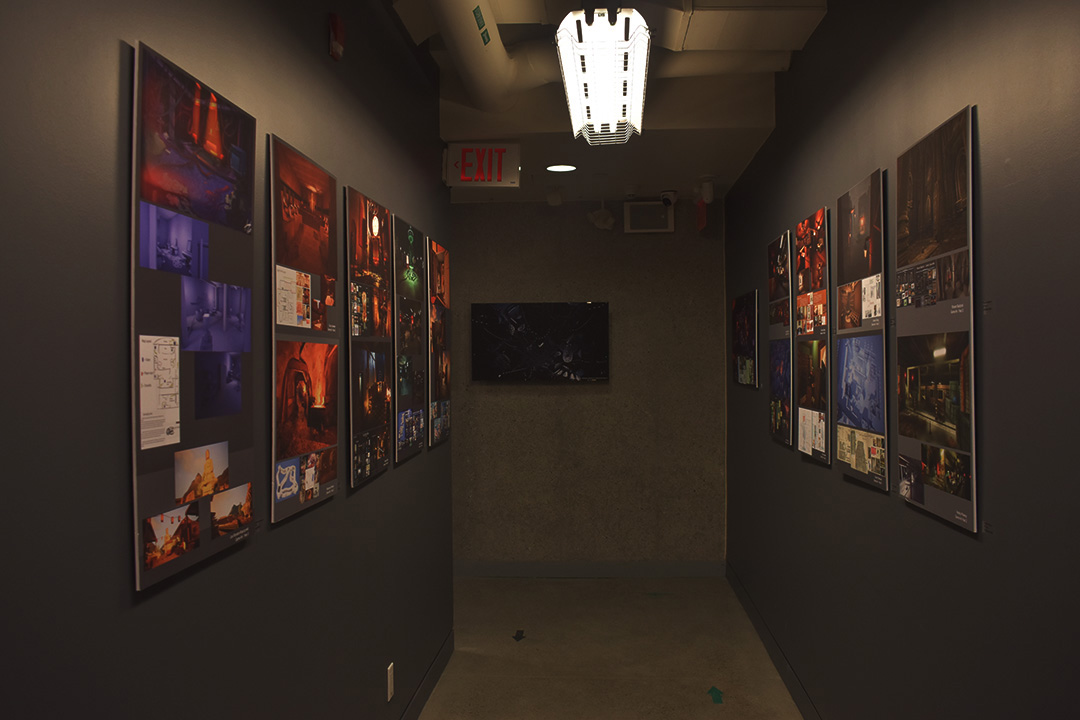
Each piece was an organized layout showing stills of different stages of the process.
“People don’t realize how much drawing and colour theory, all these things that go into creating the game levels and characters or creatures that our students are making,” said Ibric.
The majority were environmental designs, which refers to the setting in connection to theme, storyline and time-period.
Ibric said many projects required students to choose a historical place or time, do extensive research, then create a story and objective that made sense in that setting.
Third-year student Daniel Kelly constructed an abandoned subway. In his game, players would have to collect survival items like a gas mask filter and a flashlight to leave the subway.
Kelly used multiple techniques, including 3D modeling, surfacing and blueprinting.
He specifically used modular assets to build structural components.
“You have to make all the walls and ceilings and floors in pieces and connect them,” he said.
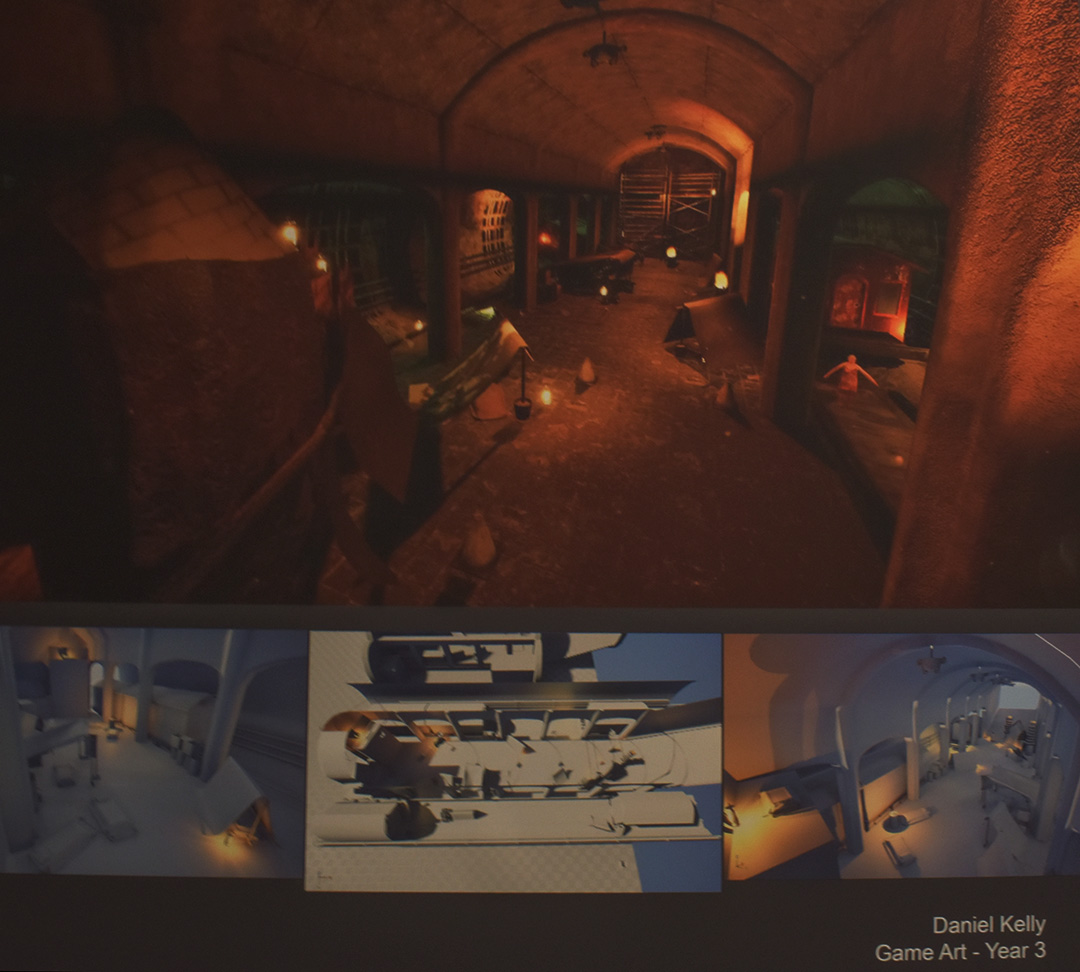
Kelly also used particle effects for subtle scenery details.
“You don’t see it in the picture, but there’s actually a little stairwell and there’s little embers flowing into it as if there’s a fire outside,” he said.
His process moved through three softwares.
Unreal Engine for the initial surface model, Maya 3D software to replicate items, Adobe Substance 3D Painter to add colour and texture, then back to Unreal Engine for the final design.
Once completed, students walked professors through the animated demonstrations of their game and explained every aspect.
The exhibit also featured animations by Game – Art alumni. They’re used a demo reel for finding work.
“Presenting it online somewhere or sharing it with a potential employer or studio… that’s how they would start the ball rolling in terms of contacting the student and doing the interview process. Letting the work speak for them first,” said Ibric.