




Gone are the days of answering newspaper ads and word-of-mouth networking. The process of finding a job has fully entered the digital age.
“A lot of times when you apply online, it always feels like you’re yelling into the void hoping that someone will check it,” says Durham College student Marsali Deonarine.
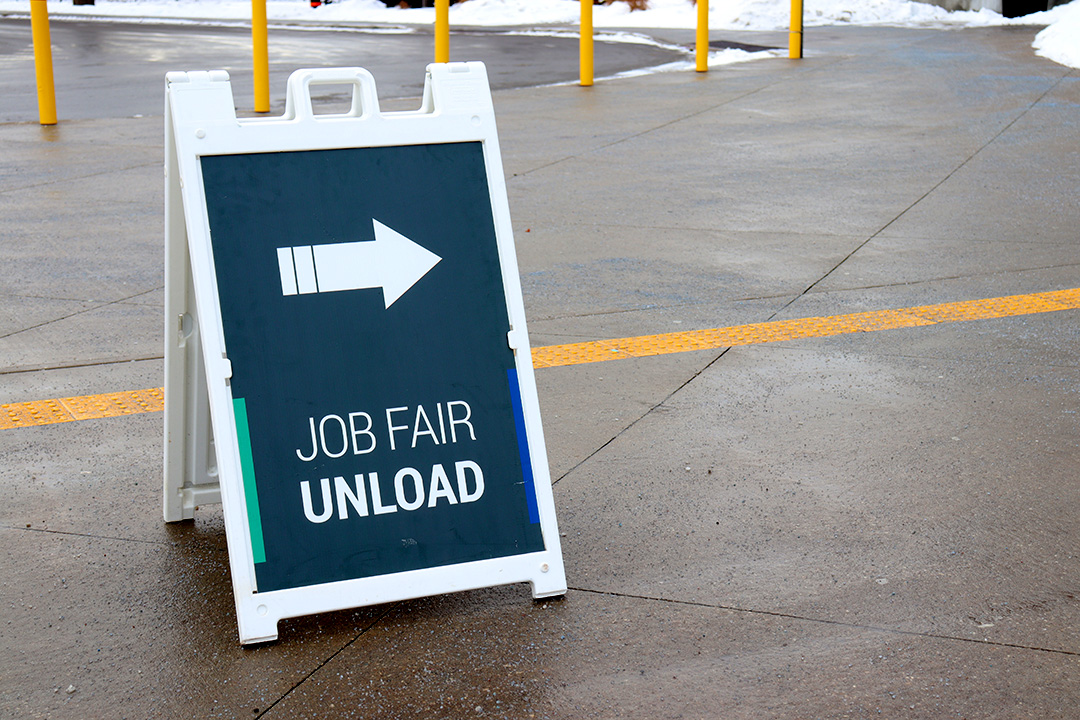
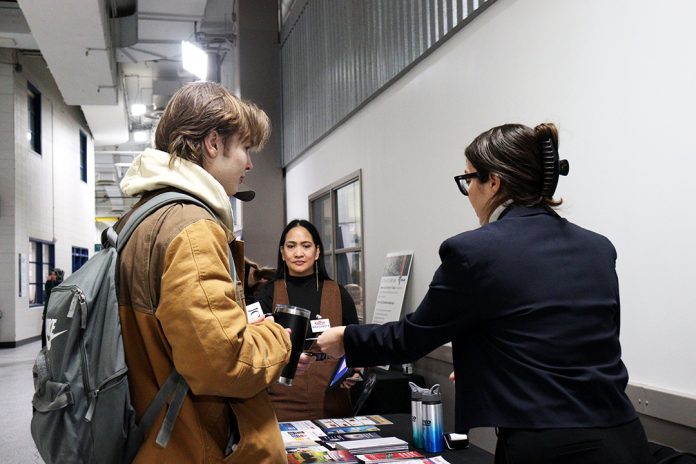
The second-year Electrical Techniques student attended the Whitby campus job fair this month in hopes of exploring her career options in-person.
Like many students Deonarine is entering the job force at a time where everything is online – where applications have become transactional and AI screening is the new norm.
Yet for many employers, job fairs are still a popular way to recruit new talent.
Matt Burrill, a Town of Whitby recruiter, has represented the town at about six job fairs in the last seven years.
“[It] gives us, as recruiters, an understanding of the new range of students and new hires that are coming into the workforce,” he says.
“It allows us to engage with their questions directly, which can help us better our way of doing things as well.”
and Ashley Evans [left] from the Municipality of Whitby attended the job fair at the Whitby campus. As recruiters, these events help them form an understanding of the new range of students that are coming into the workforce. Photo credit: Trinity Vandeloo” align=”aligncenter” id=”attachment_30174″ width=”1080″]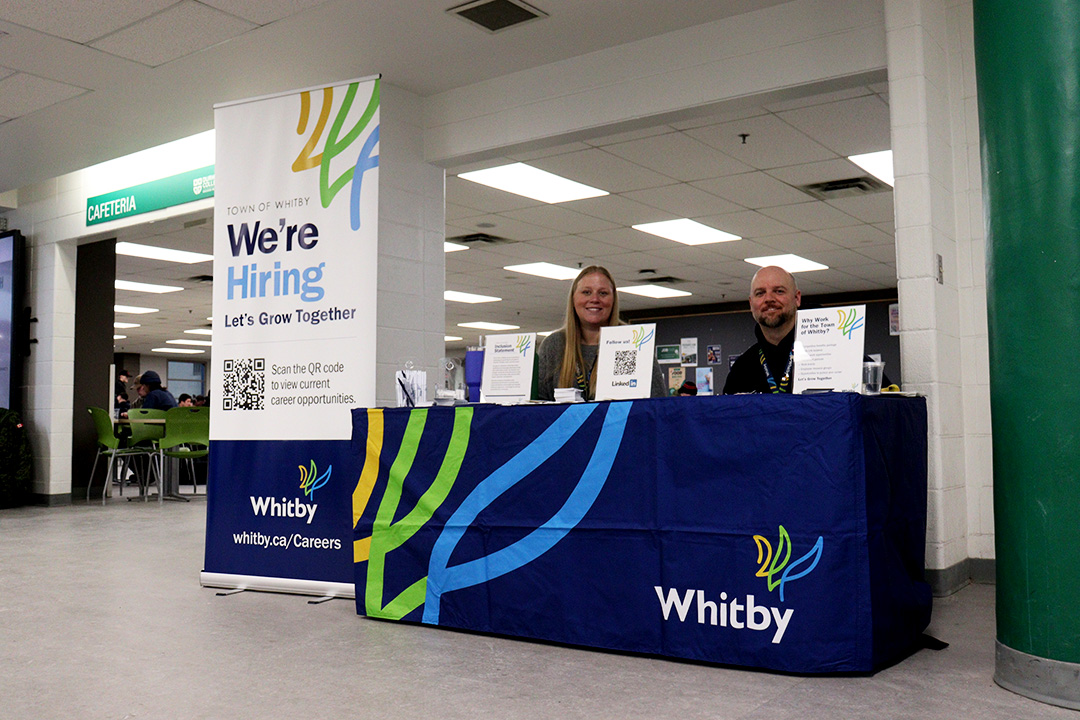
The latest data from Statistics Canada shows the unemployment rate dropped in January. However, the number of people attending job fairs is growing.
Last summer the CNE hosted its annual job fair to recruit people for more than 5,000 positions. Instead, they received well over 54,000 online applications.
Recently, the Kanata Central BIA Job Fair had more than 600 people lined up in Ottawa.
Where there is a job fair, people will follow.
David Ferguson, general manager of Marigold Ford, says his dealership attends four to five job fairs a year and considers them a successful way to recruit employees.
“Everything’s online” says Ferguson. “It’s a faceless community. So it’s so nice to put a face to the name and actually have a conversation with somebody about their potential.”
It’s that engagement that attracts people to job fairs, especially students.
Before attending the fair, Deonarine, felt like her options in the electrical field were limited.
But now she feels optimistic.
Job fairs allow students to make impressions on employers that are impossible through a screen.
“It’s always nice to get that face-to-face connection and shake their hand,” says Deonarine. “Even if it’s not what you’re looking for.”
Job hunting may have become digital but at the end of the day employers still find value in one-on-one connections.