





Food insecurity remains a growing concern across Ontario.
One in four children in Durham Region lives in a food-insecure household, according to the Region of Durham, and Food Banks Canada reported that in March 2025, approximately 760,000 people accessed food banks across the province, with 29 per cent of those visits involving children.
As food and housing costs rise, schools have become a key access point for food support, providing meals and snacks consistently, regardless of home resources.
Being hungry at school can affect a student’s ability to focus, learn, and feel supported, according to experts. Food programs in schools are in place to address this issue and help students succeed.
Ignite Durham Learning Foundation (IDLF) works in partnership with the Durham District School Board (DDSB) to help remove financial barriers that affect student success.
Emily Collins, fundraising development coordinator with IDLF, said the foundation supported more than 12,000 students last year, including through student nutrition.
“All of our food programming falls under what we like to title the S.N.A.C.K. Fund, but it looks like more than just snacks,” Collins said.
The ‘Student Nutrition Fund provides Food Access to Classrooms and Kids’ (S.N.A.C.K.). During the 2024–2025 school year, the program supported 1,445 students through in-kind food hampers, 696 students through funding bursaries, and 1,580 school-based student nutrition supports.
When a student is hungry, Collins said they typically connect with a trusted adult at their school, who then works with IDLF to provide support.
“Because of that really beautiful partnership we have and that relationship piece within schools, when a need comes, we’re able to pack something that is packed just for that student,” Collins said.
Food hampers are delivered directly to schools, removing transportation barriers for families, and can also be tailored to accommodate dietary restrictions.
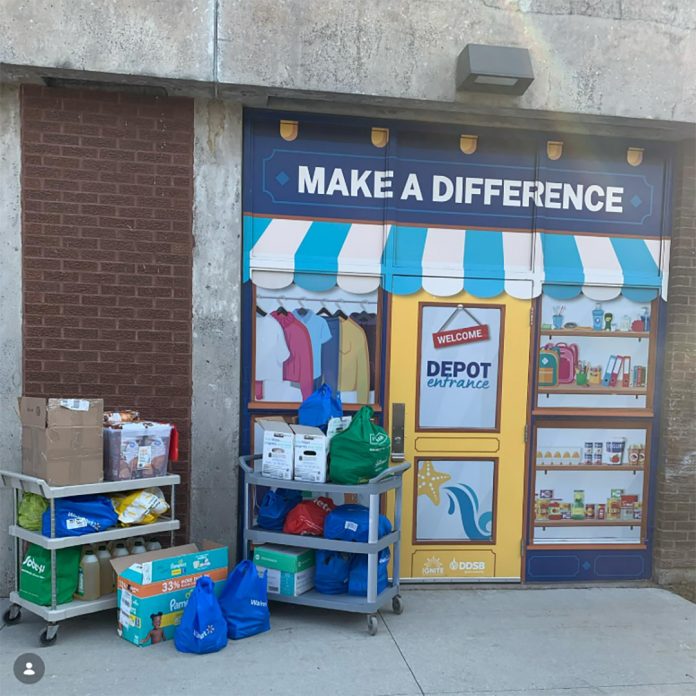
IDLF operates a Make a Difference Depot, a pantry that includes shelf-stable non-perishable items as well as fresh produce, allowing the organization to respond quickly to student needs.
Martin Holmes, an expert in food literacy at the University of Toronto, said hunger can have a direct impact on students’ ability to learn and succeed in the classroom.
“Once they can’t concentrate, their scores in math and reading have been shown to decrease,” Holmes said, noting that food insecurity affects not just physical health, but attention, academic performance and social development.
In 2024, the federal government launched the National School Food Program, committing $1 billion over five years to help provide healthy meals to an additional 400,000 children each year.
However, Holmes cautioned it is still too early to measure the full impact. “Now there’s money to do it, but there just hasn’t been a lot of time to see that money being translated into school programs right now.”
School food programs play a critical role in meeting students’ immediate needs, but their long-term effects on learning and well-being are still being evaluated.
The Joannah & Brian Lawson Centre for Child Nutrition at the University of Toronto is conducting ‘Feeding Kids, Nourishing Minds’, a research study on school nutrition programs across the GTA.
Both Holmes and IDLF point to ongoing challenges in sustaining school food programs. One major barrier is reliance on volunteers, which can limit consistency and capacity, as demand continues to grow.
While programs like breakfast, snack and lunch initiatives help meet immediate needs, they do not address the root causes of food insecurity on their own. Holmes emphasized that food insecurity is closely tied to affordability and broader economic pressures faced by families.
As demand for food support grows, school-based programs remain a vital lifeline for students facing hnger. Organizations like IDLF help meet immediate needs, but experts agree that food programs alone cannot solve food insecurity.