





A video of a rescued dog first made Avery Plivelic question the food on her plate.
“It wasn’t graphic or gruesome,” she said. “It just showed a dog being rescued, learning, and discovering her personality. I thought, ‘Wow, animals aren’t that different from me.’”
For Plivelic, then 12, the realization sparked a shift in her values. By 13, she had moved from vegetarianism to a fully vegan lifestyle, a choice she now describes as both a diet and a philosophy.
Now 21-years-old and in her second semester of Advertising and Promotion at Durham College, Plivelic sees sustainable eating as an empowering way to make a difference.
“It’s being conscious of your consumption habits, trying to do your best in a practical way to do the least harm possible and making choices that consider the environmental impact of the food you consume,” she said.
For some post-secondary students, what they eat is about more than taste or convenience. If social media is any indication, many are choosing vegan, pescatarian, or allergy-conscious diets for environmental reasons, citing concerns ranging from climate change to local farming practices.
A 2025 Canadian study of young adults found participants associated sustainable diets with environmental protection, health, and ethics but were often confused about what sustainable eating actually means.
Barriers for eating with this focus included affordability, accessibility, and low food literacy, with social media emerging as a common information source.
Plant-based creators on platforms such as TikTok, for example, might suggest that meat and dairy aren’t necessary for certain nutrients and offer alternatives but often without citing sources, leaving viewers to judge the accuracy for themselves.

Experts say improving food literacy is key.
“There is an influx of creators showcasing foods that are incidentally vegetarian or culturally relevant, which hopefully broadens people’s horizons,” said Elliot Berthelet, secretary of the Durham Food Policy Council. “But we are also seeing recipes created by AI that don’t always take food safety into account, like calling for medium‑rare chicken.”
Durham College supports sustainable eating on campus with an urban farm, providing fresh produce year-round and hands-on learning about sustainable food systems. Local suppliers and campus services also shape what students can access.
Berthelet noted, “People are concerned about local food. A lot of young people are more curious about local food sustainability. There’s interest in food sovereignty, seed sovereignty, and people are really getting involved, which is wonderful to see.”
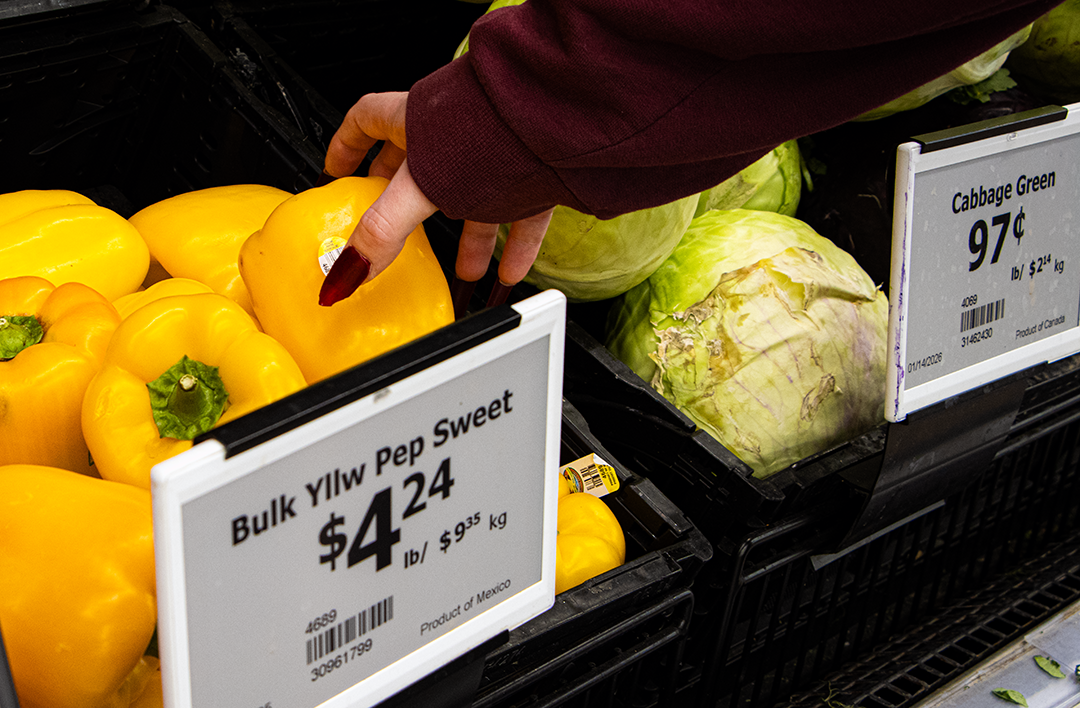
Affordability remains a challenge.
Durham Region Health reported a basic healthy diet to cost just over $300 a month per student which could be a difficult expense for students juggling rent and bills.
Berthelet added that systemic changes, like better public transit and social support, are essential for supporting sustainable choices.
Nutritionist Sylvia Emmorey, who teaches at Durham College, emphasizes that healthy, plant-based eating doesn’t have to break the bank.
“Staples like rice, beans, legumes, and frozen or seasonal produce can be affordable and nutritious,” she said. “Even things like bagged salads can be pricier than buying whole heads of lettuce. Students need to understand alternatives, like dried beans or legumes, which last a long time and are cheap.”
Despite these hurdles, students are finding ways to integrate sustainability into daily life.
“By cutting out animal products, I know I’m making a difference,” Plivelic said, emphasizing both the ethical and empowering aspects of her diet.
“We often get trapped in a cynical mindset, thinking one person can’t make a difference. But optimism and empowerment matter. You can inspire others and live according to your values.”