




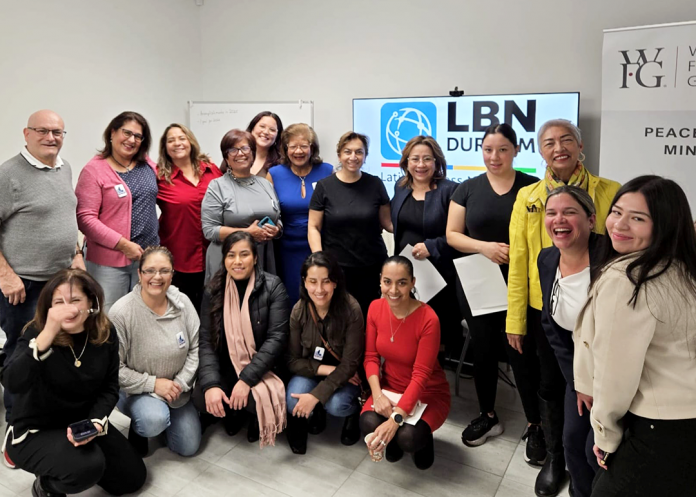

Amid the turmoil of Augusto Pinochet’s “hectic” military dictatorship, a family from Santiago de Chile, parents and three daughters, traded weekends at their grandmother’s small farm and week-long beach camping trips for a new life in Timmins, Ont.
Their new home was a town with “very cold, very long winters,” and also experiencing an influx of Chilean migrants arriving to work in the booming aviation industry led by Austin Airways and the Deluce Family.
December 1980 led Cecilia Waldron, then 19, now 65, on a lifelong path of community service and entrepreneurial endeavours, which would eventually create Latin Business Network Durham (LBN).
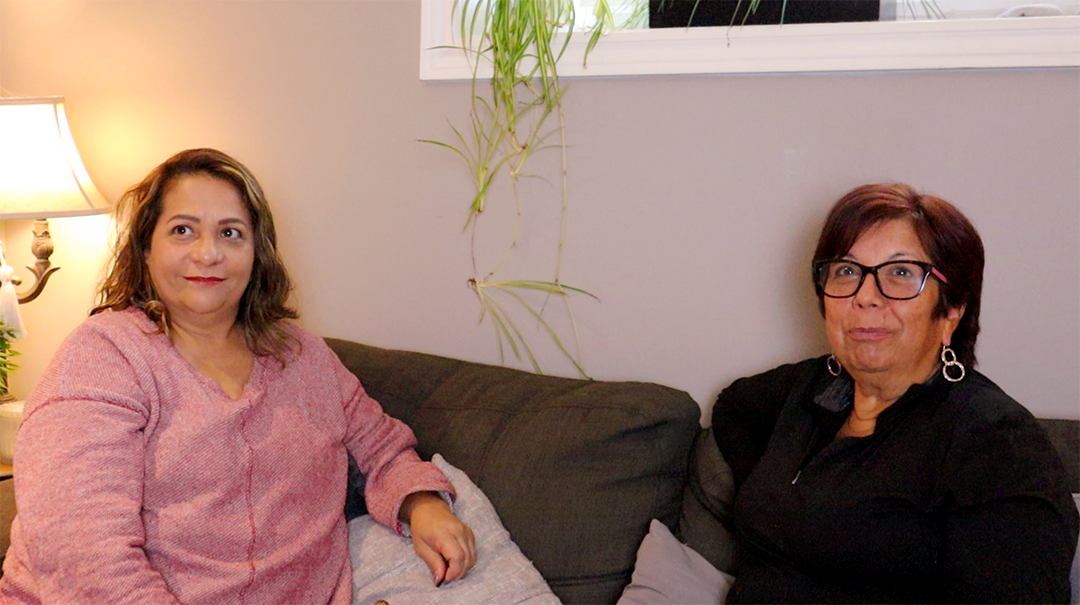
Irene Lopez, Waldron’s “partner in crime,” friend, and business mentor, says Waldron is, a bicultural, resilient, kind and strong Latina woman whose personality and dreams are larger than life.
Lopez describes LBN’s main goal is “to unite and educate.”
She says her friend isn’t thinking of her own benefit, but of legacy, not for herself, but for an underrepresented, often invisible community in Durham and its future generations, the Latino entrepreneurs.
According to Trends in Immigration and Citizenship in Durham (data up to 2021), at least 3.2 per cent of Durham’s visible minorities are Latin American, and Spanish ranks as the fourth most common non-official mother tongue in the region.
Waldron is a well-known community and business leader in Durham, known in Latino and non-Latino circles alike.
After four years leading the Alianza Hispano Canadiense (AHCO) and deciding to retire in December 2024, Waldron, still full of energy, ideas, and a passion for community building and Latino empowerment, launched a new project.
With LBN, she hopes to use her experience, knowledge and network to support Latinos in Durham, a community she has served for over seven years.
After living in Timmins, Toronto, the East Coast, and now Durham, she realized her arrival in Canada, though far from glamorous, was far better than the experiences of many other immigrants she would hear about over the years.
At times challenging, her migrant experience was softened by a small community of Chileans in Timmins who welcomed her and helped her family settle in.
“I came to Toronto, and I realized most immigrants don’t have that experience, most immigrants don’t get friendly faces to say, you know, come and have dinner with us.”
This sense of community building was natural for Waldron; “I guess I just like to organize things,” which also proved to be helpful as a newcomer.
“It was just another way for me to practice my English” and meet new people, a skill she has honed throughout the years, fundamental for her type of work, she says.
After retiring in 2024, Waldron looked back on her journey.
Brazos Abiertos, a previous non-profit she created, took a big toll on her mental health and revealed the importance of setting boundaries.
Waldron has been in non-profits for a long time and in each she found bureaucracy was hard to navigate.
Reminiscent of the hardworking, resilient spirit of Latin Americans and the dire economic situation, after she retired, Waldron thought to herself: “I’m going to be working on something I’m passionate about,” and found a new way to unite and empower Latinos.
LBN, a tool to help “new entrepreneurs, business owners and the Latin community in Durham,” explained Waldron.
The goal for the first year of LBN, “was to get to know each other” and expand its reach.
The directory, a list of Latino-owned or run businesses in Durham, has been a key initiative for her. A straightforward idea, but Latinos have an untrusting nature, it has proven to be challenging.
She explains LBN is at a point, “where people are starting to trust who we are, I think that’s been the biggest challenge.”
“I’m here to change minds. I’m not here to, you know, to play along,” reflects the perseverant attitude highlighted by both Lopez and Gabriel Norori, owner of Gabe and Panchas, a Latin-owned business at Market at 70 King.
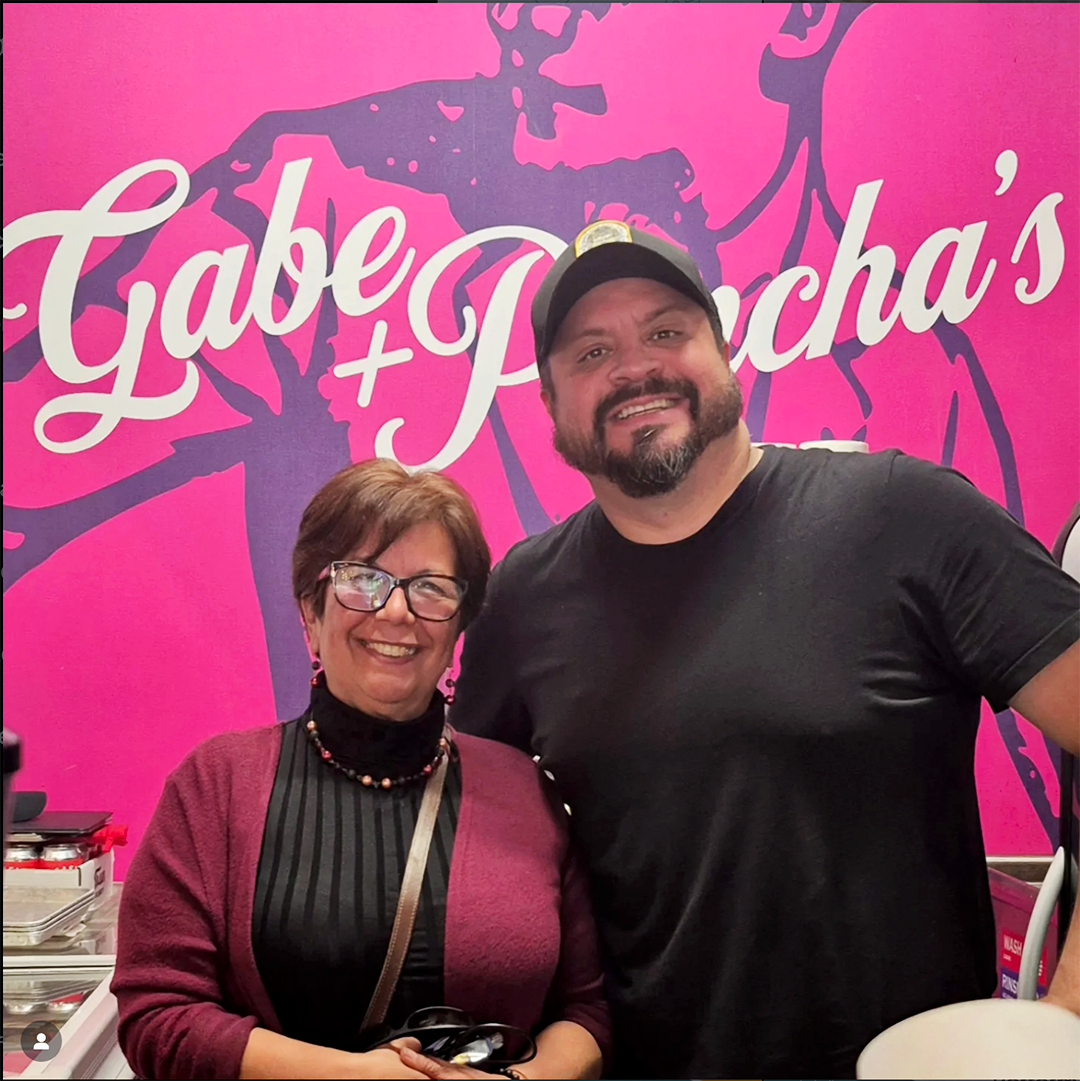
Photo provided by Cecilia Waldron
Waldron’s secret power is her biculturality and authenticity.
“She has been exposed to the Canadian community for a longer time,” explained Lopez, and is also in touch with the Hispanic community; she can understand both cultures and act as a bridge.
“You can approach her to talk without fear of being judged or told what to do,” says Lopez, who thinks Waldron encourages growth from a genuine desire to help others.
As a good partner in business, Lopez pushes for Waldron to charge for her services. “You can’t do everything for free all the time either,” says Lopez.
After the initial stage of planting the seeds, the vision for LBN in 2026 is to apply for some grants and “get stronger, more into the politicians, and, you know, people’s faces. That we are here, right?” said Waldron.