




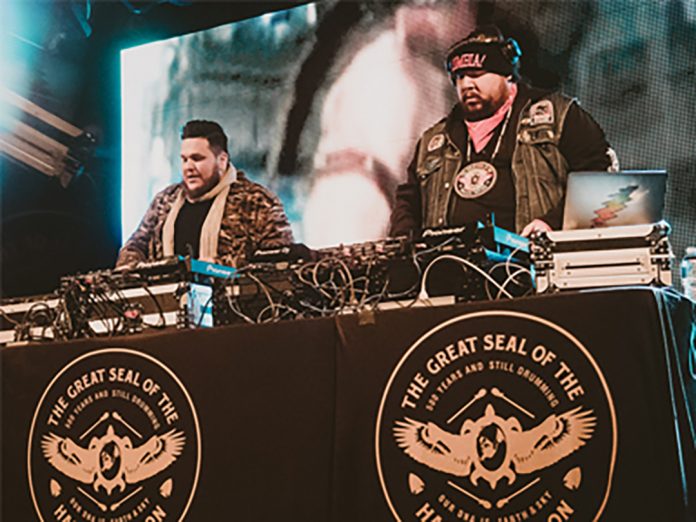

They have a story told between the lines of every sound, beat and lyric. The Halluci Nation combines electrifying instrumental music with modernized Indigenous elements to produce dynamic and spine-chilling sounds that either make you want to get up and dance or lock you in place.
Formerly known as A Tribe Called Red, The Halluci Nation is a Canadian electronic music group from Six Nations that elevates music to new levels by using various musical and instrumental components such as hip hop, reggae, moombahton (an electronic dance genre), and blending it with dubstep-influenced dance music and aspects of First Nations music, like chanting and powwow drumming.
The band infuses rhythm and the cultural traditions of First Nations peoples into their music, staying true to their roots and the inspiration that resonated with the masses. The initial interest in turning Indigenous sounds into an electrical sensation came when co-founder DJ NDN (Ian Campeau) and Ehren “Bear Witness” Thomas discussed hosting a nightclub associated with Aboriginal youth.
When Thomas and Campeau recognized the lack of Indigenous representation in their hometown of Ottawa, they developed a method to share their culture with the city and encourage people to participate willingly.
Hosting their first show at Ottawa’s Babylon nightclub in 2007, the overwhelmingly positive response from the public encouraged the group to continue hosting shows and use their platform to spread more awareness about the history and culture of the Indigenous community while continuing to entertain the masses.
During their run, they released a series of albums such as A Tribe Called Red, Nation II Nation and one of their well-known works, We Are The Halluci Nation, which got nominated for CBC Music’s Best Canadian Album of the Year and was recognized at the 2017 Juno Awards.
As previously mentioned, the band’s music is an electrifying and genre-blending fusion that combines traditional Indigenous sounds with contemporary electronic rhythm, which they refer to as Powwow-step or sometimes electric powwow.
They often collaborate with other musicians and Indigenous creators, including Tanya Tagaq, a throat singer from the Inuit community; Shad, a prominent Canadian rapper; and Lido Pimienta, a Colombian-Canadian artist, among many others from diverse backgrounds and musical styles.
These collaborations allow them to explore innovative ways of integrating their sound and message while experimenting with a fusion of various musical styles. It also allows Indigenous artists a chance to amplify their voices and educate listeners on the variety of Indigenous cultures through mainstream media.
As for the collaborations with non-Indigenous artists, they bridge a gap between people of different cultural backgrounds. Teaming up with other artists outside of the Indigenous community helps amplify their influence and spread more awareness about Indigenous rights to a broader and more diverse audience.
Each album has a list of songs that range from being dynamic, energetic and loud to focusing more on delivering powerful messages about oppression, colonialism and a call to action.
Some songs convey their message more subtly, such as “How I Feel.” They maintain a rhythmic beat and use rhymes in their lyrics, which carry a political impact while also encouraging you to dance and enjoy the music.
In parts of the chorus of “How I Feel,” there are rhythmic lyrics shedding light on broader issues the community is facing. For example, “Now we see our daughters that are disappearing quickly, say it’s through the cracks while ignoring all the history,” and “Governments be scooping babies way before the 60s when you legalize abduction, you legalize the misery,” are powerful rhymes discussing missing Indigenous women and residential schools.
Then there are songs like “ALie Nation,” which are extremely direct with their message, making it feel less like a song and more like a political speech to the listener. No rapping, no rhyming, but a voice wanting to share a story about trauma, hardships and resistance. Absolutely powerful.
Songs like Electric Powow, Northern Cree- Red Skin Girls and Stadium Powow have a powerful and gripping soundtrack, mostly utilizing Indigenous segments but still making you want to dance despite the intense tempo and beats.
However, songs like “We Are The Halluci Nation,” “ALie Nation,” and “SOON” don’t have the same jovial ring to them as the other pieces do and deliver insightful political commentary to bring attention back to the activism aspects of the group’s purpose.
The Halluci Nation combines Indigenous roots, culture and political stances to make tunes that can send a shiver down your spine and vocals that are loud, powerful and captivating. There aren’t many music groups that can encompass not just cultural pride and resistance but a beat so sick it shakes you to your core.