




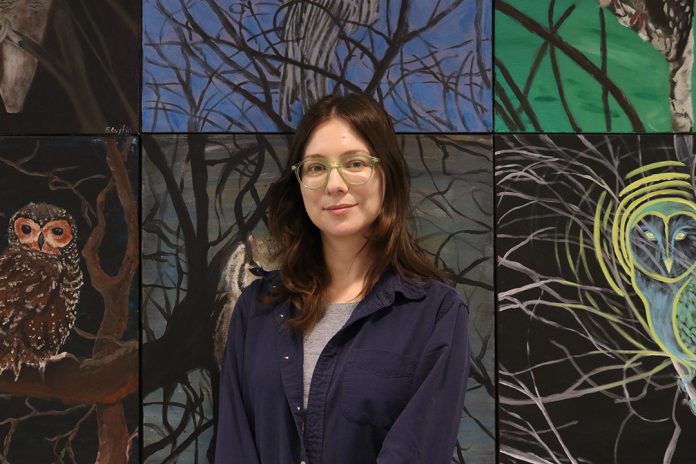

Fine Arts students will take over the Pit tomorrow (April 2) to present collaborative art activities they have created over the semester.
The goal of ‘Art in the Pit’ is to engage people on campus with art, according to professor Dani Crosby.
“In the Pit and down the Riot Radio hallway, you’re going to find free engagement activities for creation, ranging everywhere from colouring pages to painting to engaging with cosplayers to question and answer game-based and creative booths,” she says.
Art in the Pit is just one example of public art on campus.
Durham College’s Gordon Willey building hosts all kinds of public artworks, most of which have been created by DC students.
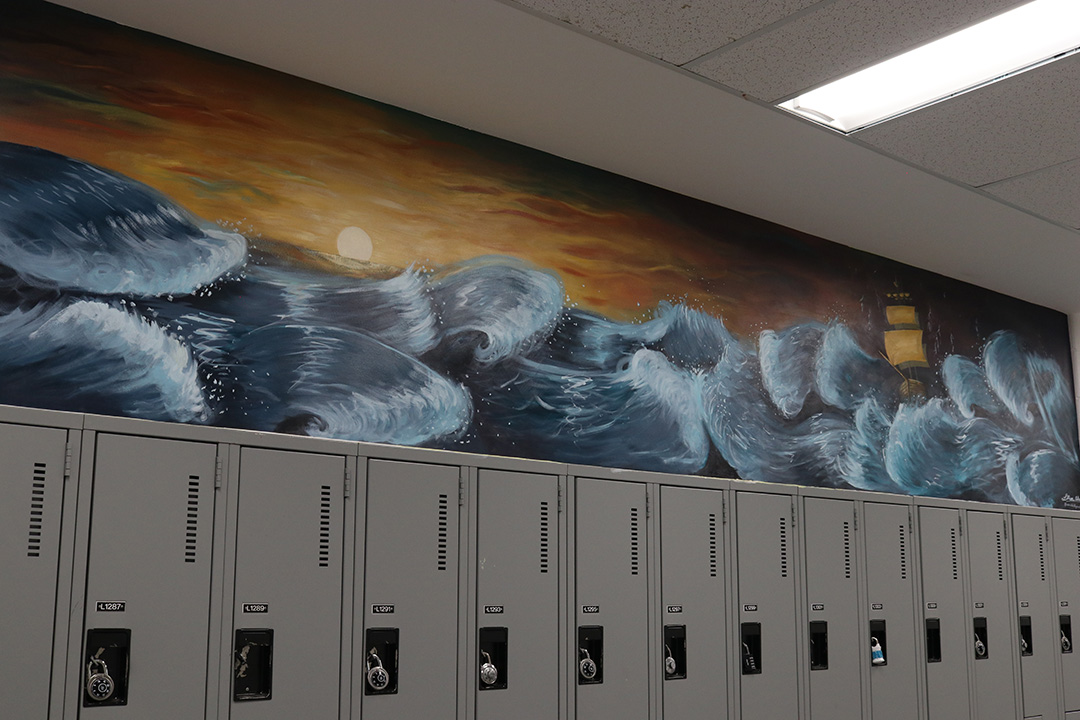
Public art around the campus ranges from the moose sculpture in the computer commons to the murals painted above the rows of lockers on both floors of L-Wing.
Crosby, who teaches in Fine Arts, describes public art as any piece of art that is not commissioned or a part of a gallery, and is accessible to the public.
“Art that is public facing by nature in publicly accessible spaces whether they are indoor or outdoor in nature,” she says.
Crosby, who is an artist herself, says this form of art allows everyone to have equal access to art and gives people the ability to explore art freely at their own pace.
Public art allows people to touch and interact with pieces without the same restrictions as galleries or museums.
She says as a child she was always more interested in public-facing art, like the art she would see on the sides of streets.
She says the ability to interact with it and return to it on a later date is what attracted her to this art form.
“I preferred walking through the doorway of public art that I could access again on my own time, in my own way, with less constraints or expectations,” says Crosby, “where I could simply go up and touch it with my hand and feel the paint on the bricks or, the panels that were installed.”
The appeal of public art is not just about the art itself, it’s also about being able to collaborate creatively with others.
Crosby says public artwork projects around campus allow for students to work together, even across programs, to come up with a creative piece of art everyone can enjoy.
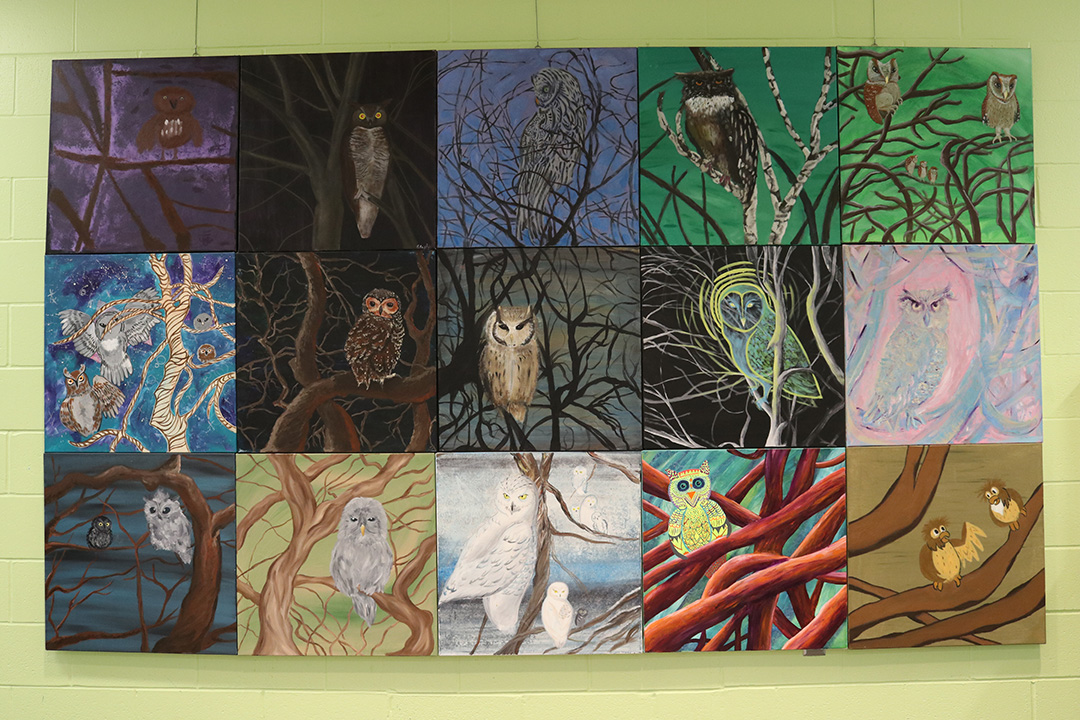
“So, something that is interdisciplinary or inter-departmental, where multiple student voices and perspectives are being honored in different types of art created within multiple programs,” says Crosby.
Art students are not the only ones who benefit from the art around campus. There are many students on campus who notice and admire this art.
Zahra Ngampua is one of these students. She says every piece of art has a different value depending on who views it.
“It depends on who sees it. I could go to the museum and find a piece of art has no value to me. Then some graffiti I saw on the street or on campus could end up having more value for me. Art is art,” she says.
Another student, Earakan Kuruparan, says there is no “inherent value” to art and how a person feels about the piece is what gives it meaning.
“There’s no inherent value to art. It’s more so the subjective nature of how you feel about something when you see it,” says Kuruparan.
For students who admire the public art around campus, Crosby says there are lots of ways to get involved with art creation on campus, including ‘Art in the Pit’.
‘Art in the Pit’ runs from 10:30 a.m. to 5 p.m. and is free for all attendees.