




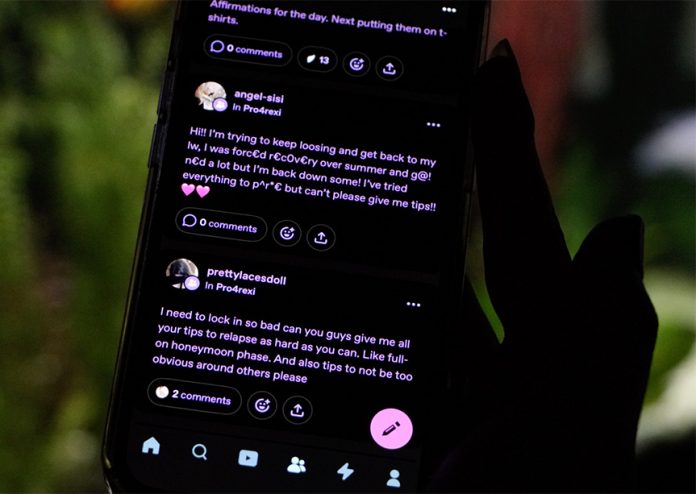

For 18-year-old Khaley Brown, a soon-to-be college student in Toronto, scrolling through TikTok and X (formerly known as Twitter) as a young teen quickly turned into a dangerous obsession.
“It started off small,” she recalls, describing the first glimpses of ‘thinspiration’ content through friends and social media. “It just kind of became a thing where I felt like there was something wrong in my own life.”
Videos showing extreme restriction, body checks, or “what I eat in a day” routines led her to scrutinize every bite of food, comparing herself to strangers online.
Brown says the content consumed her high school years.
Meals became stressful events, social outings turned into sources of panic, and even being around family felt impossible at times.
She remembers avoiding dinner with her mother to escape scrutiny.
“I can’t eat three peas, you know? Without getting some questions,” she recalls.
She describes feeling constantly compelled to restrict food, comparing herself to others who seemed effortlessly thin.
“I can’t be the weak one who doesn’t do it,” she says.
Experts say Brown’s experience is far from unique. Sarah Nutter is an associate professor of counselling psychology at the University of Victoria who specializes in body image and eating disorders.
She explains that social media algorithms reinforce harmful patterns by delivering more of the content users engage with.
“What the algorithms don’t do is filter out poor information, misinformation, bad advice,” she says.
Repeated exposure to restrictive diets, calorie counting and idealized bodies normalizes disordered eating behaviours and amplifies body dissatisfaction, according to Nutter.
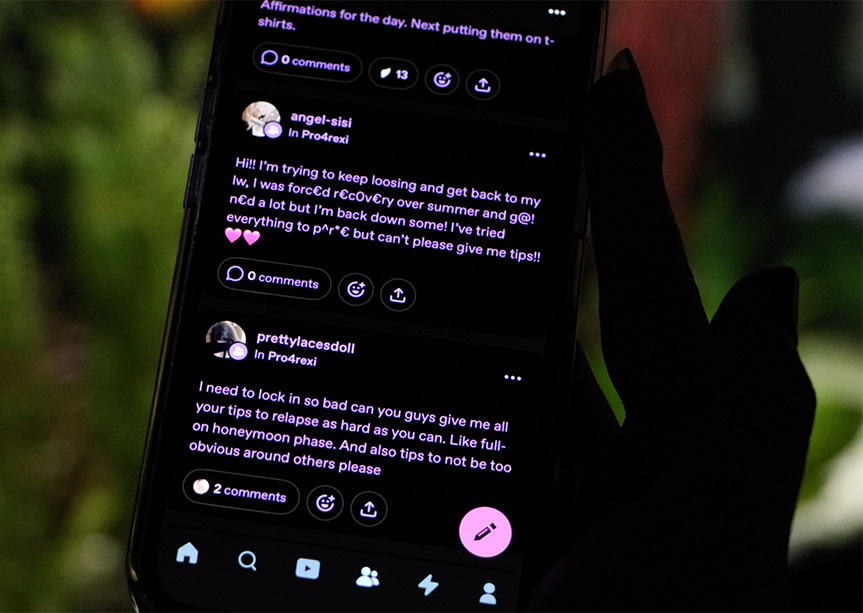
A meta-analysis of 28 studies published in 2025 found “a complex relationship” between social media use and disordered eating, such as anorexia.
Researchers found this was especially true when the type of content, such as ‘thinspiration’ or ‘pro-ana’ (pro-anorexia), was the independent variable.
Brown’s relationship with food suffered the most.
She viewed meals not as nourishment but as a challenge to overcome, often panicking while eating in front of her mother.
“I started looking at food as the enemy and not something that I need to literally survive,” Brown says.
Social media blurred the line between inspiration and pressure, portraying extreme restriction as attainable and glamorous.
Nutter notes social media’s influence extends beyond food, shaping broader perceptions of health and attractiveness.
“Social media is a toxic environment in a lot of ways,” she says. “Clients experience anxiety and mood-related symptoms because of comparisons that they’re constantly making to others online.”
Content labeled as fitness or healthy eating often hides unrealistic expectations, encouraging unhealthy extremes while presenting them as aspirational.
Brown eventually began distancing herself from the triggering content, unfollowing accounts, deleting saved posts and limiting engagement with online feeds.
While she acknowledges the struggle is ongoing, she emphasizes the importance of reclaiming mental space.
“I just need to stop entertaining and stop letting these random people who don’t know me and don’t care about me in the slightest hold such a big part of my mind,” she says.