




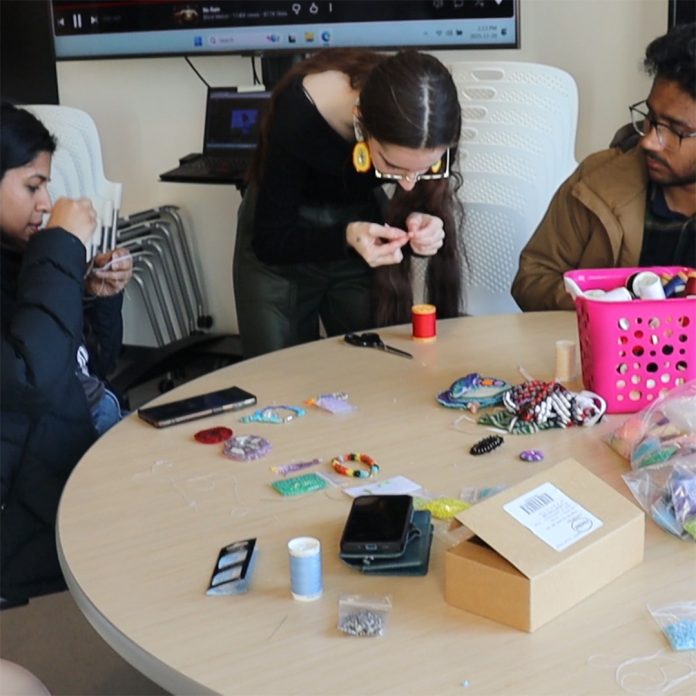

Durham College’s First Peoples Indigenous Centre (FPIC) brought a traditional craft to campus recently that promoted both mindfulness and creativity.
On Nov. 20, the centre provided a free beading workshop in the CFCE building.
Durham College alumna Brooke Wheeler guided participants through a tack-down beading method that uses a flat stitch to embroider the beads onto a felt back.
Wheeler cut square pieces of stiff felt material with line and circle markings for students to weave through as a starting point for designs.
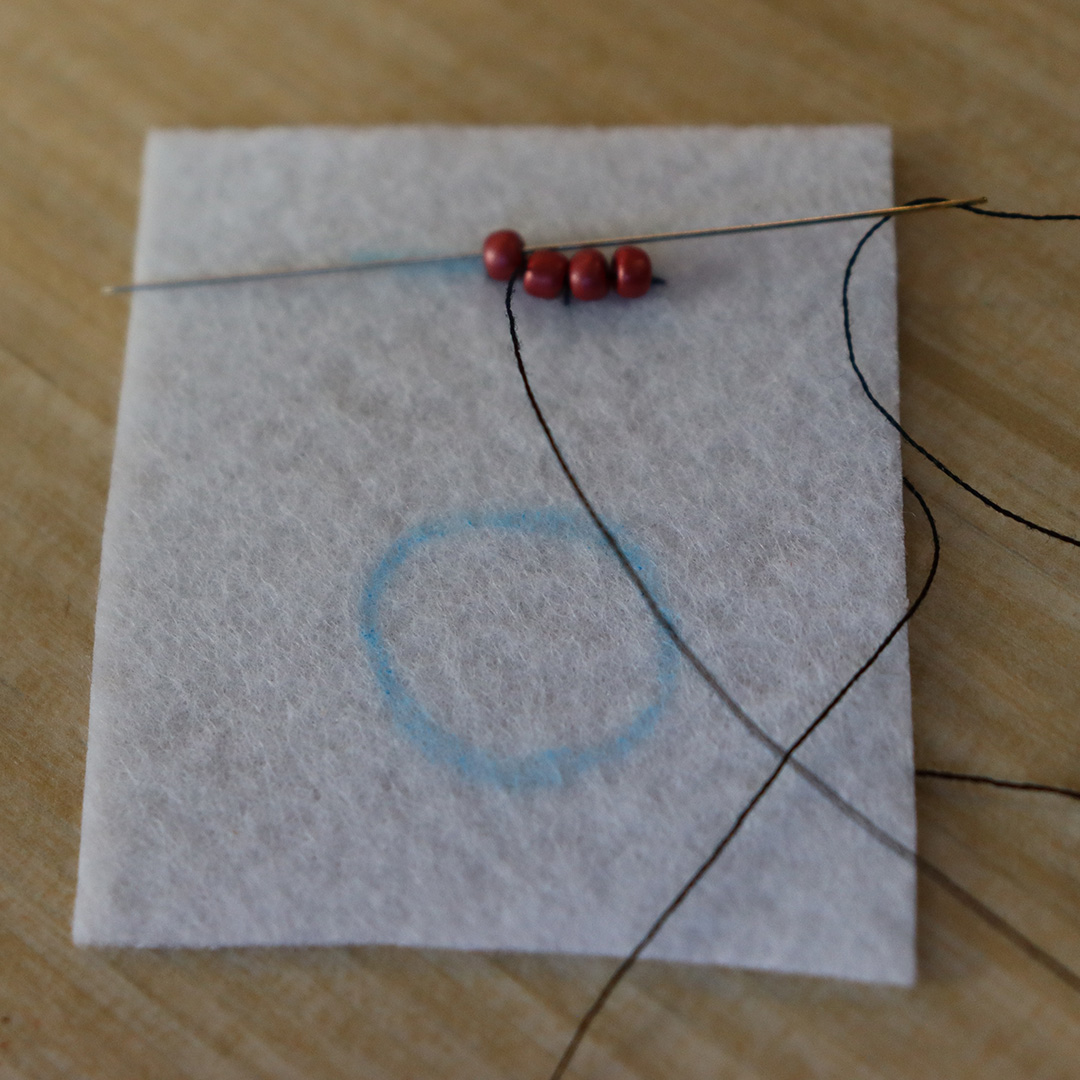
The process led students to sew the thread and needle through the fabric using specific techniques to secure the thread.
Participants added four to seven beads at a time, repeating a securing technique until beads completely traced the line and circle markings.
“Every piece in a beadwork is just as important as every other piece because if one bead is off it messes up the picture, which is like a little teaching about community and things like that,” said Wheeler.
She said disconnection from her Indigenous roots led her to learn how to bead from the internet, which in itself can exclude the teachings that come with learning with others.
“It’s not as accessible to people who are not in contact with bead workers or elders as often, so the idea of having these workshops and making that accessible…is something that is important to me and is important to the centre,” she said.
Like Wheeler, broadcasting student Cassandra Grant had already learned traditional beading, but her connection to the craft brought her to the workshop.
Grant described beading as a passion that ties to her Mohawk roots.
“It’s just a symbolism of my culture. It’s a craft, it’s a hobby, it’s fun,” she said.
While the beading workshops may have mental and social benefits for students, the cultural significance is expansive.
“It’s to practice mindfulness, and I’ve heard it can be used in tapestries to record memories and stories,” said Grant.
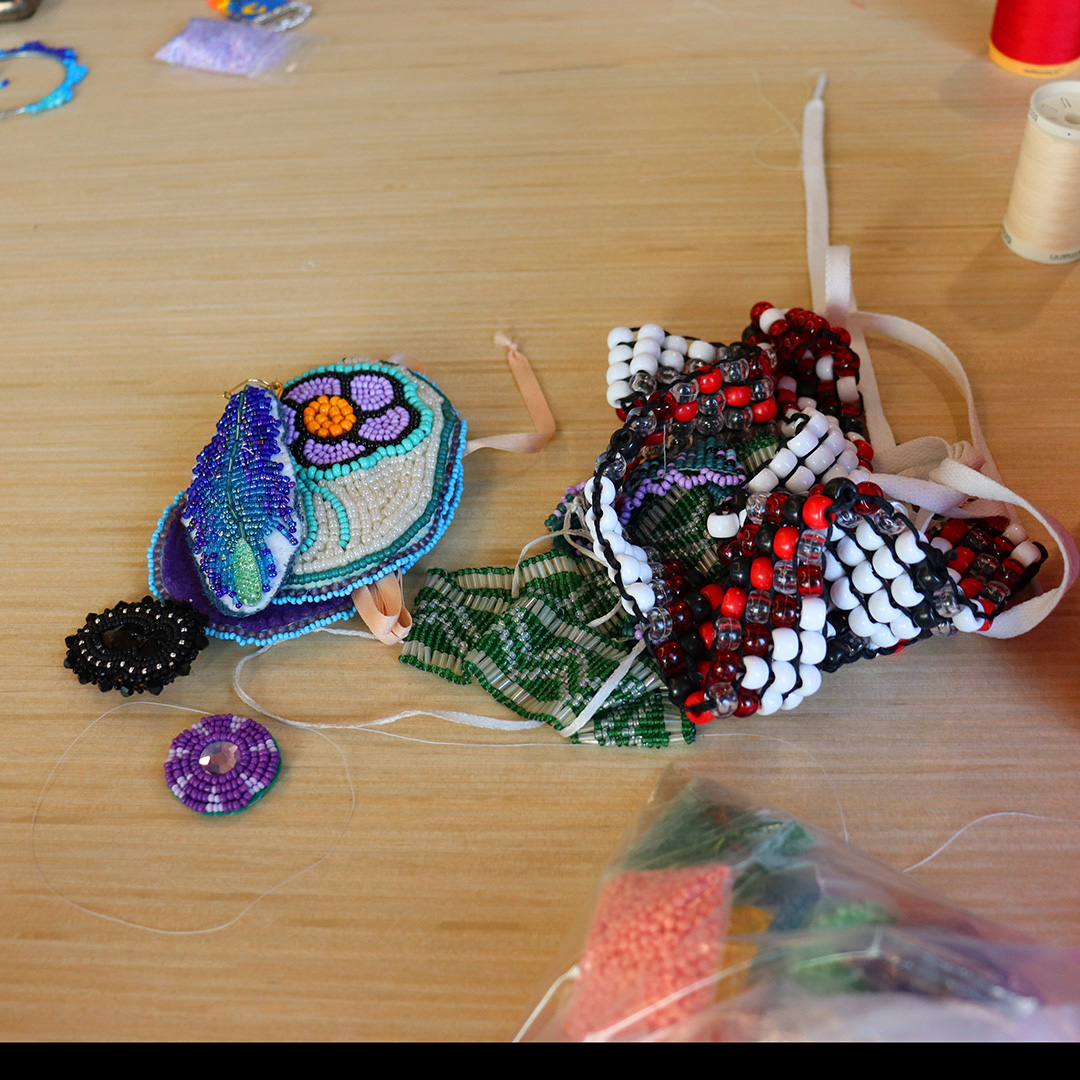
Indigenous cultures have created patterns and intentional arrangements in beadwork to tell stories and symbolize events without words. An example would be the designs on a two-row Wampum belt, symbolizing an agreement between two parties with different values.
Wheeler has led several workshops for the centre, also known as Suswaaning Endaajig. Falling in line with the Anishinaabe name meaning ‘a nest away from home,’ FPIC aims to provide activities to connect students to the space and to each other.
Suswaaning Endaajig has monthly beading challenges where people can send their creations to its Instagram page and be featured in a recap post. The deadline this month is Dec. 20.
The centre will have more free activities this month, including a vision board workshop on Dec. 9.